Commentary, Sep 05, Jos Algra
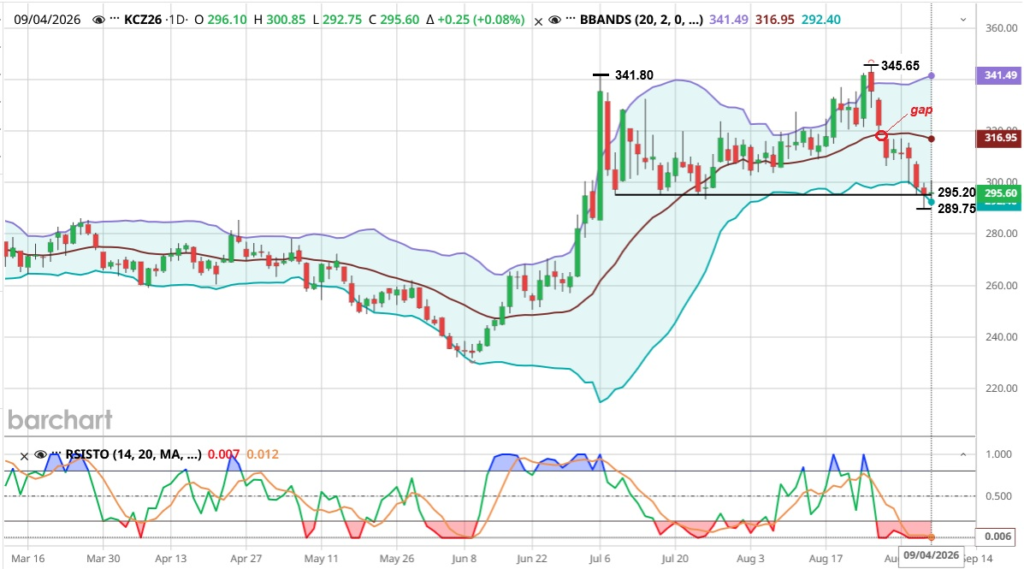
The price of coffee position December in New York reached a high of 345.65 on Tuesday, August 25, the highest price since July 6. However, the price peaked there and closed down 6.15 cents that same day. Wednesday was worse, with a loss of 13.33 cents, and Thursday another 12.50 cents. It continued to fall to a low of 289.75 on Thursday, September 3. On Friday the 4th, the decline halted for the moment; the price rose slightly and closed at 295.60.
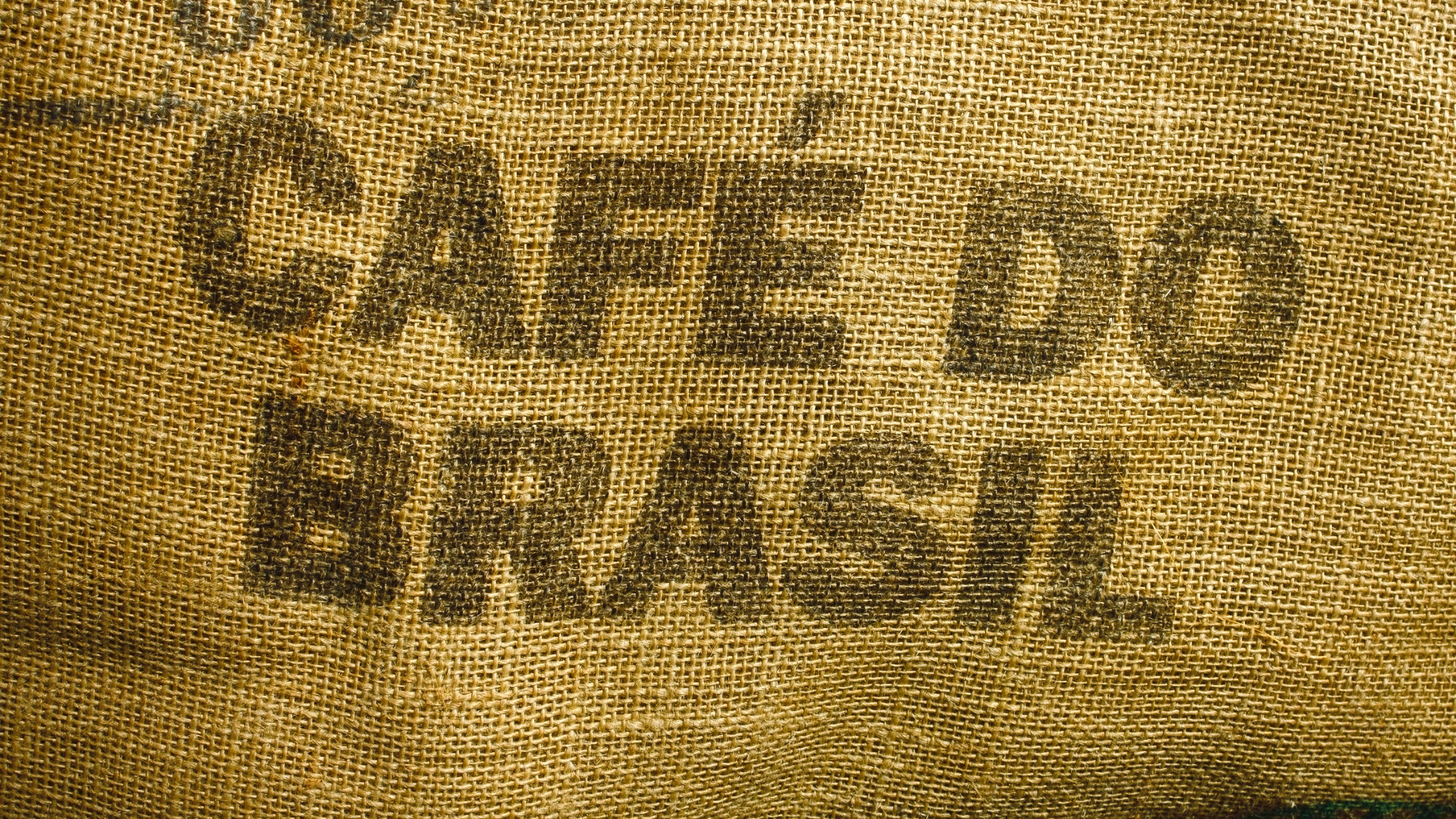
The price of coffee is under pressure from the large volume of the Brazilian harvest, which has concluded and may be much larger than predicted. The sharp drop on Wednesday, August 26, is attributed to the correction of an “error” in the Cecafé system, which suddenly showed that Brazil exported 1 million more bags in August.
The price of Arabica in New York dragged down Robusta in London, which broke through the 3,600 dollar per ton support level and closed Friday at 3,430 $/MT.
The first question is whether the 295.20 floor will hold; it has already been tested three times, including on Thursday and Friday. If it gives way, the price could fall to 285.25, 263.50, and eventually 231.80.
To the upside, there is resistance at the 316.90-319.80 gap. In theory, gaps should always be filled, meaning the price should rise to that level, because there are outstanding buy and sell orders. In practice, this doesn’t always happen; it can take days, weeks, or even months for a gap to close. The market is highly oversold, as the stochastic shows, which could lead to a retracement.
Support: 295.15-295.20, 289.75, 285.25, 263.50, 256.90, 250.55 and 231.80. Resistance: 316.90-319.80 (gap) and 345.65.
In the Commitment of Traders report, combined Open Interest in futures and options fell by 1,373 contracts over the past two weeks, from 202,264 to 200,891. Open interest in futures alone decreased by 9,988 contracts, from 156,273 to 155,275 last Thursday. Daily volume averaged 29,500 contracts.
Net long positions held by funds fell by 7,899 contracts, from 15,044 to 7,415. Spreads, which reflect the degree to which each non-commercial trader holds combined long and short positions, decreased by 860 contracts, from 73,087 to 72,227.
Net long positions held by commercials increased by 2,119 lots, from 49,532 to 51,651. The short position of commercials decreased by 4,312 lots, from 101,009 to 96,697.
Index funds increased their net long position by 1,540 contracts, from 34,114 to 35,654.
They are reducing their bullish bets. Roasters are taking advantage of the lower price to lock in contracts. Producers are lowering their price fixations in response to the price drop, but at some point, they will have to fix their contracts against the December position. Many will have lost a lot by waiting to fix, hoping for a larger price increase.
In the August 23 blog post, “Change is on the horizon” I commented that Brazilian exports seemed to be staying at around 3 million bags in August, the same as in July and below the monthly volume from March to June. Well, nothing could be further from the truth; the increase in production volume for this harvest is indeed starting to be noticeable.
On Wednesday, August 26, a major surprise emerged: Cecafé corrected a “system error” and updated its export volumes for August. The projected exports for August suddenly jumped from less than 3 million bags to nearly 3.8 million.
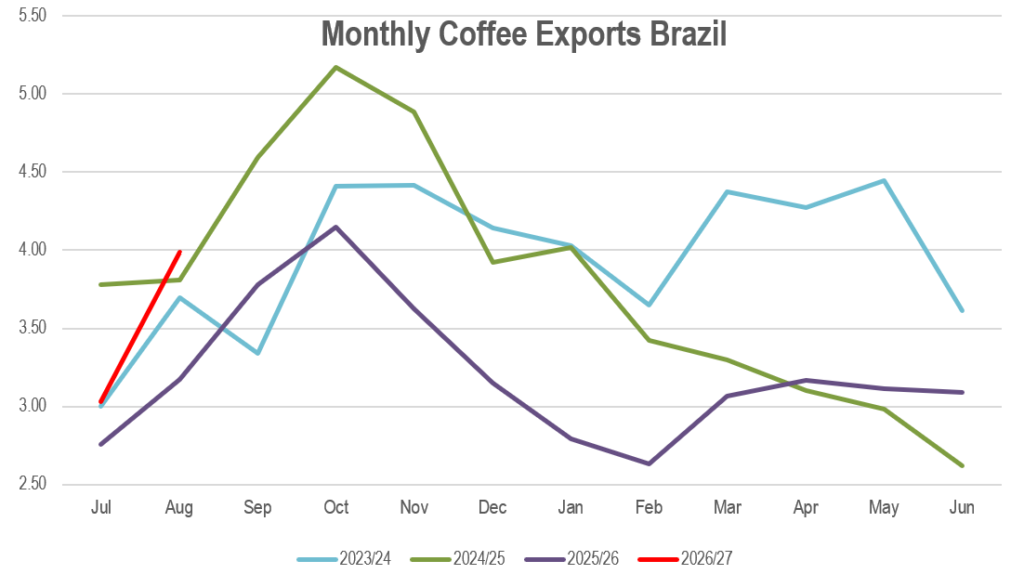
At the close of the month, Cecafé’s preliminary figures reflected an even higher export volume of 4.0 million bags, a 32% increase compared to July and a 24% increase compared to August 2025. Cecafé’s data was considered among the most reliable in coffee statistics, but now doubts exist; a million bags cannot be overseen. Certificates of origin issued in August totalled 3.8 million bags, 14% more than in July and 34% more than in August 2025.
Brazilian exports in 2025/26 (38.5 million bags) were significantly lower than those of 2023/24 (47.4 million) and 2024/25 (45.6 million). The 2023/24 cycle volume is a record, and in calendar year 2024, exports reached 50.6 million bags, an average of 4.2 million per month, with a peak of 5.2 million in October.
In the first three days of September, more than 600 thousand certificates of origin have already been issued. It may seem a bit early to draw conclusions, but at this rate, new records could be set. On the other hand, significant problems with export logistics are anticipated if the volume increases considerably.
To track the price trend, it is crucial to monitor Brazil’s monthly export volume published by Cecafé, hoping they don’t make another such monumental “error.”
The correction of the “error” significantly altered the landscape. Archer Consulting changed its weekly commentary from “Where is the global demand?” to “bloodbath.” It seems certain that coffee warehouses are overflowing; there are reports that traders are no longer accepting coffee due to lack of space.
The market reaction was predictable given this news. On August 26, the New York price began to plummet, and by Friday, it had fallen from over 340 cents to less than 300 cents. Rumours are circulating that Brazil’s 2026/27 harvest is even larger than previously forecast, exceeding 80 million bags, 8 million more than the average figure reported so far.
This “small error” cost several market operators a fortune, as they were confident that prices would remain high. It also created conflicts between buyers and their suppliers, who failed to adequately hedge their positions and are now seeking ways to unwind high-priced contracts.
There is selling pressure on prices and spreads in Brazil, except for the highest grades. This is because there is a significant amount of low-quality coffee and small beans. In the short term, however, with the drop in prices in New York and London, Brazilian spreads have widened slightly.
Producers in Peru report that the spread for Grade 1 coffee has risen to +70%. We previously reported a considerable decrease in the Peruvian harvest volume; there are serious concerns about contract defaults.
The harvest will soon begin in Mexico and Central America and the main harvest in Colombia, which will increase pressure on the price of Arabica coffee, although Colombia’s harvest will be smaller than last year and logistical problems following the earthquake in the country are still ongoing.
Jos Algra is an international consultant with more than 40 years of experience in coffee and working with producer organisations.
This blog was originally published in Spanish in Claase: