During the week, the coffee price of December position in New York rose to a high of 335.50, the highest price since July 6. On Friday, however, it fell 6.65 cents and closed at 322.65. Friday, August 21, was First Notice Day for September, which has a premium of more than 36 cents over December; the coffee shortage in the short market continues.
En la semana el pecio de café posición diciembre en Nueva York subió a un máximo de 335.50, el precio más alto desde el 6 de. El viernes, sin embargo, cedió 6.65 centavos y cerró en 322.65. Viernes 21 de agosto fue First Notice Day para septiembre, que tiene un premio de más de 36 centavos sobre diciembre; la escasez de café en el corto plaza continua.
En la quincena el pecio de café posición diciembre en Nueva York se movió entre un máximo de 323.75 y un mínimo de 302.60. El viernes subió 9.8 centavos para cerrar en 315.90. Septiembre subió 13.90 centavos a 335.55. El mercado sigue fuertemente invertido, sobre todo entre las primeras posiciones, reflejando que la escasez de café en el corto plaza continua.
In the first half of the month, the price of coffee December position in New York fluctuated between a high of 323.75 and a low of 302.60. On Friday, it rose 9.8 cents to close at 315.90. September rose that day 13.90 cents to 335.55. The market remains heavily inverted, particularly for the nearby contracts, reflecting the ongoing short-term coffee shortage.
Amsterdam, June 2026 – OpenAtlas, Gosling Coffee, and Progreso today announced the successful completion of a pioneering European Union Deforestation Regulation (EUDR) deforestation risk assessment covering five coffee producer organisations across Uganda, Rwanda, and Peru; representing 3,074 smallholder farmers and over 2,358 hectares of farmland, using geodata collected through Beyco Farmer Platform, Progreso’s digital management system for cooperatives, which ensures that data is generated, owned, and managed by producer organisations themselves.
The collaboration, marks one of the first end-to-end EUDR compliance assessments in which the underlying data belongs to, and benefits, the producer organisations themselves. Analysis was conducted via OpenAtlas’s API-based deforestation risk platform, enabling automated assessment at scale against EUDR criteria.
Results across all five cooperatives of Busongora, Rwandaro, Rutas del Inca, TUK, and Nyampinga showed 99.7% of analysed farms classified as low deforestation risk, covering 99.9% of the total area assessed. The assessment demonstrates how producer organisations can generate the geolocation and risk data required under the EUDR, helping maintain access to EU markets while reducing compliance burdens across supply chains.
“We wanted to be ahead of EUDR rather than scrambling when it comes into force,” said Bonnie van Poortvliet, CEO of Gosling Coffee. “Working with Progreso and OpenAtlas felt like the right way to do that, using data that belongs to the cooperatives, not to us, and building something that benefits them as much as it benefits us.”
“I think the results speak for themselves: smallholder farmers around the world are facing exclusion from the European Union common market not because they’ve done anything wrong, but because they lack the resources and tooling to prove that they haven’t” Harry Marshall, CEO & Co-founder of OpenAtlas. “Our collaboration with Progreso and Gosling Coffee is a first step in managing that gap through partnerships”
“This collaboration between Progreso, OpenAtlas, and Gosling Coffee demonstrates that EUDR compliance does not have to be something imposed on producer organisations. With the right tools and partnerships, cooperatives can take the lead in managing and owning their data, while buyers and service providers help unlock the resources needed to meet new regulatory requirements. We believe that strong data capability in producer organisations goes far beyond compliance, it creates long-term value, resilience, and empowerment.”
About the partnership
Gosling Coffee, a Dutch specialty roaster, has sourced from Progreso’s cooperative network in East Africa and Latin America for several years. Progreso has supported participating cooperatives with technical assistance and digital traceability infrastructure. OpenAtlas provided the geospatial intelligence layer — translating cooperative plot data into regulatory-grade EUDR risk signals through its API.
The assessment covered cooperatives in three countries, with all data analysed to date consisting of largely low deforestation risk.
About OpenAtlas
OpenAtlas is an Amsterdam-based geospatial intelligence company transforming satellite and earth observation data into automated supply chain risk signals. Its API-first platform helps companies navigate regulatory requirements including EUDR, with a focus on scalable, data-sovereign compliance infrastructure.
About Gosling Coffee
Gosling Coffee is a Dutch specialty coffee roaster sourcing directly from cooperative partners across East Africa and Latin America. They believe that equal trade in a transparent way is going to make the coffee industry sustainable. With direct contracts between cooperatives and Gosling Coffee and for instance this collaboration, they make a real difference for farmers they work with.
About Progreso
Progreso is an international development organisation based in The Netherlands, that strengthens farmer-owned cooperatives and producer organisations across Latin America, Africa, and Asia. Through Technical Assistance, access to finance, business development services, and digital solutions such as Beyco, Progreso helps producer organisations improve their resilience, competitiveness, and long-term sustainability. Its approach focuses on empowering cooperatives to create value for their members and play a leading role in sustainable supply chains.
After a period of relative calm, the Progreso Côte d’Ivoire division has seen a resurgence of activity in recent weeks, spanning agroforestry, income diversification, and a new technical assistance partnership.
Zaranou: progress and lessons in agroforestry transition
At a time when climate challenges and the sustainability of agricultural value chains sit at the heart of our priorities, the project in Zaranou, run with CAADI and CAMAYE, focuses on reforestation and cocoa regeneration as a way of restoring ecosystems and strengthening producers’ resilience. Following its initial implementation phase, the picture is mixed but rich in lessons.
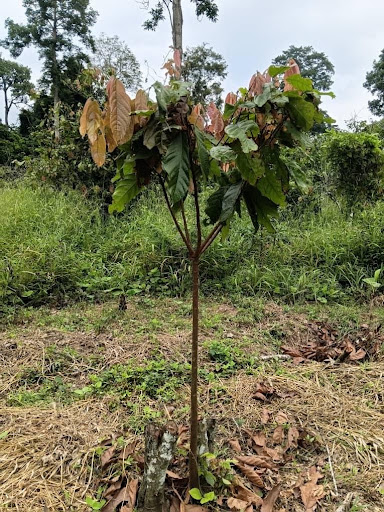
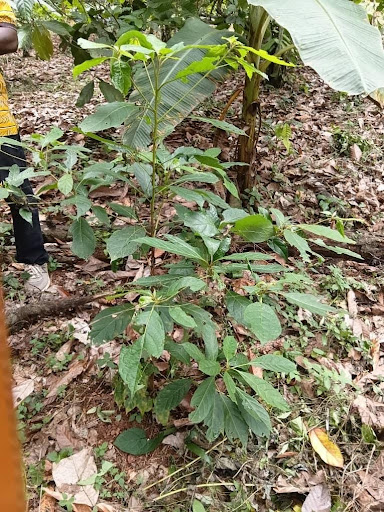
Cocoa regeneration has gone well. Plots have received regular, rigorous maintenance, pruned cocoa trees and young seedlings and banana trees are growing strongly, and plant health is well managed, laying a solid foundation for a gradual return to production.
Reforestation has proven harder. The phase developed 4 hectares with four pioneer producers, against an initial target of 10, and ran into real constraints: schedule delays from funding gaps and unpredictable weather, and a seedling survival rate of only around 30 percent, driven mainly by difficult access to certain plots and a lack of post-planting maintenance, particularly for species like petit cola.
Based on these findings, Progreso Côte d’Ivoire and its partners are strengthening the monitoring framework between June and September, with three priorities: rehabilitating and expanding the area, by replacing dead seedlings across the existing 4 hectares and securing 6 new ones to reach the 10-hectare goal; stepping up on-the-ground support, through monthly and quarterly monitoring reports and greater producer accountability for plot maintenance; and improving performance and diversification, targeting a survival rate above 70 percent, introducing suitable forest and fruit tree species, and continuing phytosanitary care for cocoa regeneration.
From beans to mushrooms: diversifying income in Ouassakro
Faced with climate uncertainty and fluctuating cocoa prices, relying on a single crop is no longer enough to secure the resilience of rural communities. With that in mind, Progreso and the SCAOD-SCOOPS cooperative took a decisive step forward in Ouassakro, in the Diégonéfla department, where a large-scale training and technical support mission ran from July 27 to 31. The goal: turn mushroom cultivation into a real driver of financial empowerment alongside cocoa.
Mushroom cultivation complements cocoa well. Where cocoa is highly seasonal with widely spaced harvests, mushrooms offer a regular, fast-turnaround income stream, and one that creates direct ecological synergy with cocoa farming: cocoa husks, once discarded or left to rot, are reused as a rich growing substrate, turning agricultural waste into a resource that creates value.
The results were concrete. More than 65 producers were trained across five localities (Ouassakro, Kongokro, N’zuekro, Tiégba, and Bronda), producing over 250 bags of growing medium using three formulations built on local residues, including cocoa husks, rice straw, corn cobs, and rice bran. Producers gained full command of the production cycle, from substrate preparation and pasteurization through seeding, incubation, harvesting, and packaging.
Beyond the technical results, the initiative lays the groundwork for scaling up the Ouassakro mushroom farm. By generating alternative income year-round, farming families strengthen their food security and financial stability. Next steps include setting up three Village Savings and Credit Associations to organize community savings and sustain the activity long-term, alongside a rigorous technical monitoring plan carried out by trainers and farmer inspectors.
A new two-year technical assistance agreement
With the previous round of technical assistance having ended in March 2026, Progreso remained in ongoing discussions with its long-standing partner, Rabobank Foundation, exchanges that continued both in person at the CHOCOA conference in Amsterdam and online. Those conversations led to a new agreement, signed on July 22, to resume technical assistance for six cooperatives in the cocoa sector.
Alongside traditional activities such as improving governance, strengthening the quality of financial data, and developing business plans to secure financing, the program will also focus on income diversification and financial education. The team is preparing to begin work with all six cooperatives in August 2026, starting with data collection for the baseline study.