Written by Ayub Asingataba: Program Manager East Africa
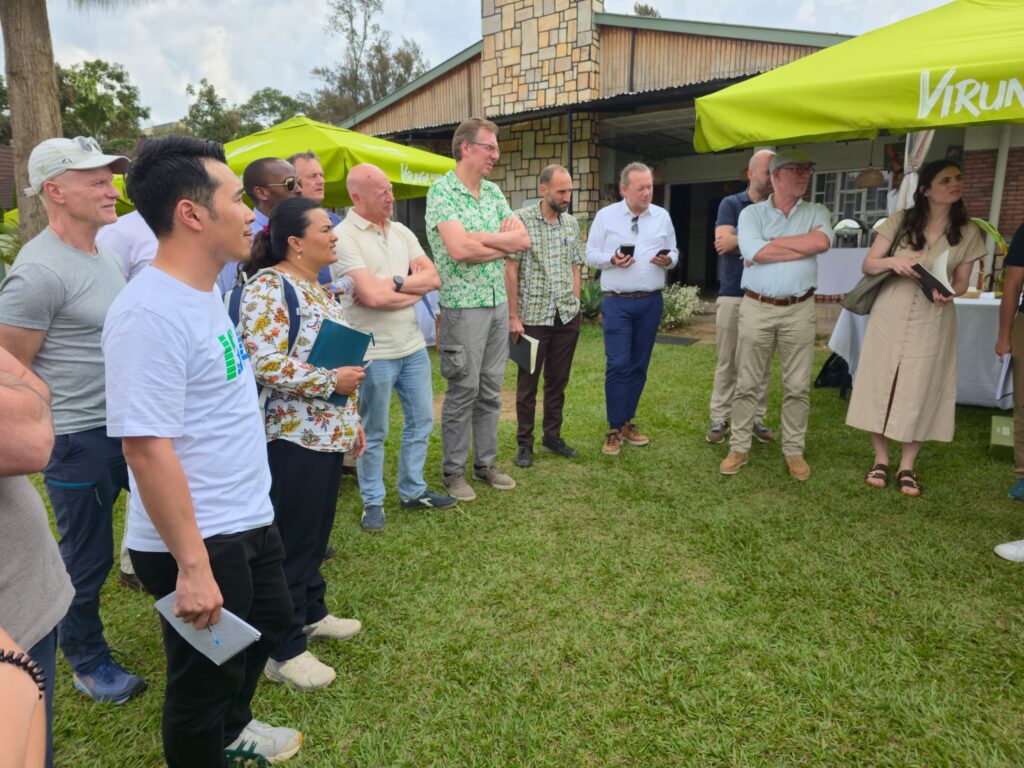
How do you know a development program has truly succeeded: When others come to learn from it. That thought stayed with me as Wageningen University & Research, one of the world’s leading agricultural universities, visited Dukunde Kawa Musasa Coffee Cooperative in Rwanda. The purpose of the visit was not to evaluate another donor-funded project. Instead, Dukunde Kawa is being studied as a Master’s-level case study of how a farmer cooperative can successfully transition from aid to a sustainable, competitive business. To me, that distinction matters.
Too often, development is measured by activities completed, budgets spent, or reports submitted. But the true measure of success is much simpler: Can an institution continue to grow, compete, and create value long after external support has ended? Dukunde Kawa demonstrates that it can.
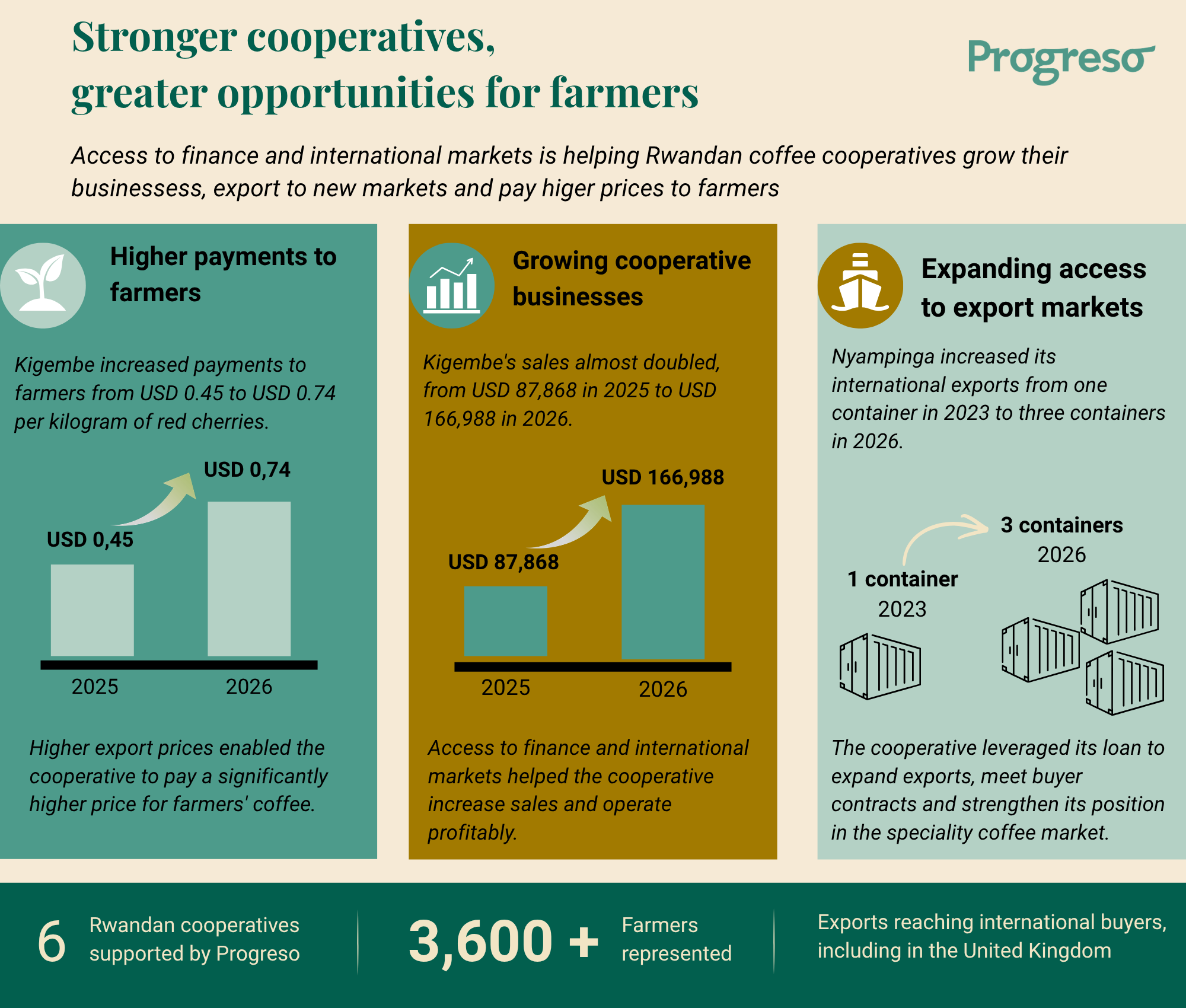
Over the years, Progreso Foundation has partnered with the cooperative to strengthen governance, financial management, business planning, and investment readiness. Through this partnership, Dukunde Kawa has expanded access to finance, diversified farmer income sources, strengthened its presence in international markets, and contributed to more than a 25% increase in farmer incomes. These are not simply project outputs—they are evidence of a cooperative building long-term resilience and creating lasting value for its members.
As Miel observed during the visit: “Dukunde Kawa shows that when cooperatives receive the right support, they transition from aid to sustainable businesses that compete globally” That observation captures why this visit mattered. Today, Dukunde Kawa is no longer benefiting from development support. It is contributing to global knowledge. The fact that one of the world’s leading agricultural universities has chosen the cooperative as a case study sends a powerful message: strong producer organizations are not only engines of rural development; they are models of innovation, resilience, and sustainable business.
This visit also reinforced another lesson for me. Success is when cooperatives can attract investment, compete in international markets, improve member incomes, adapt to changing market and climate conditions, and inspire others to follow their example. As Progreso Foundation, we were honored to host the Wageningen University delegation and facilitate this exchange of knowledge. We hope the lessons from Dukunde Kawa will inspire similar transformations across coffee-growing communities in Rwanda, Uganda, and beyond.
The greatest legacy of development is not the projects we complete. It is the institutions that continue to thrive, create opportunities for their members, and become examples for the world to learn from.