From first financing to first exports

Progreso has provided its first loans to three Rwandan coffee cooperatives. All three loans have been repaid in full, and for two of the cooperatives, the financing helped make something possible for the first time: exporting their own coffee internationally.

Buhanga, Kigembe and Nyampinga were the first three Rwandan coffee cooperatives to receive financing from Progreso. The loans helped strengthen their working capital, enabling them to purchase coffee from farmers, meet buyer contracts and pursue new market opportunities. For Buhanga and Kigembe, this support helped pave the way for their first international coffee exports, with shipments reaching buyers in the United Kingdom. Nyampinga, meanwhile, used the financing to expand its international exports, increasing shipments from one container in 2023 to three in 2026. The three cooperatives are part of a wider group of six Rwandan cooperatives supported by Progreso, representing more than 3,600 farmers.

From access to finance to access to markets

Coffee cooperatives need working capital to purchase coffee from farmers, cover processing and logistics costs, and meet buyers’ quality and documentation requirements before receiving payment for their exports. Access to finance helps bridge this gap. With the necessary funds available, cooperatives can purchase coffee from their members, fulfil orders and pursue opportunities in international markets.

The results are visible in the cooperatives’ business performance. Kigembe nearly doubled its sales between 2025 and 2026, while Buhanga increased the volume of red cherries purchased from farmers by around 65% over the same period. These developments reflect how access to finance and international markets can help cooperatives strengthen their businesses and create opportunities for their farmer members.

Better market access, better returns for farmers

Access to international markets has also brought better prices for farmers. In 2025, Buhanga and Kigembe sold their coffee on the domestic market, where green coffee fetched USD 4.74 per kilogram. In 2026, they accessed international markets, where the price reached USD 7.10 per kilogram. At Kigembe, the price paid to farmers increased from USD 0.45 to USD 0.74 per kilogram of red cherries between 2025 and 2026. For farmers, higher payments can make a tangible difference to household incomes and the ability to invest in their families and farms.

Esperance Nyiransabimana, a coffee farmer supplying Kigembe Cooperative, increased the volume of red cherries she delivered to the cooperative’s coffee washing station from 2,257 kilograms in 2024 to 4,000 kilograms in 2025.

“I never expected that coffee from my farm would be appreciated by people in Britain,” she explained.

Her experience illustrates how stronger cooperatives and improved market access can create opportunities for farmers to increase their production and benefit from the coffee they grow.

A foundation for continued growth

All three loans have been repaid in full, marking a positive first step for Progreso’s financing operations in Rwanda. These first operations provide a foundation for continued collaboration with cooperatives as they strengthen their businesses, develop market relationships and create opportunities for the farmers they represent.

For Buhanga and Kigembe, the financing helped open the door to international exports. For Nyampinga, it supported the expansion of existing export activities. Together, these experiences demonstrate how access to finance, combined with market opportunities, can help cooperatives build stronger businesses and deliver greater value to their farmer members.

Nyamirima Mutegaya Cooperative Society: Women leading, young people growing 

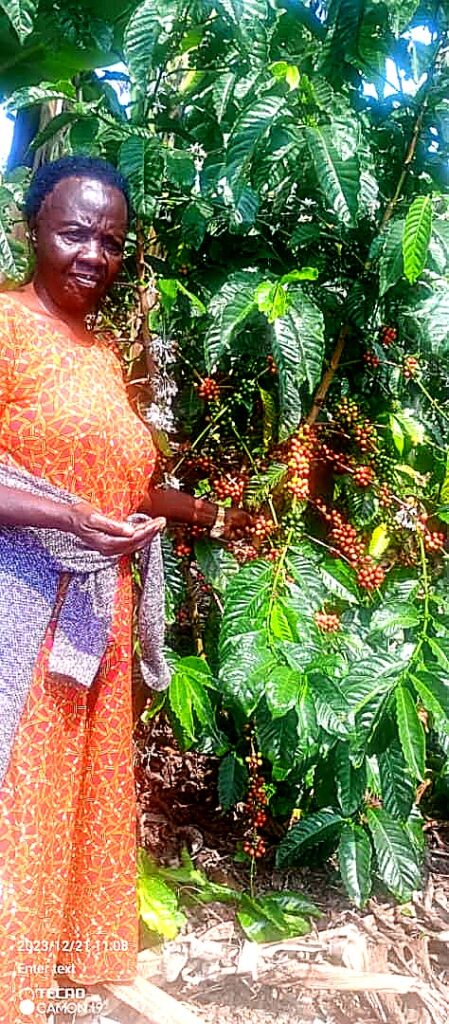
As we get closer to the December 2 Beyco V-Auction, we are introducing the Ugandan cooperatives behind the coffees featured in the auction. This week, we go over to the green hills of Ibanda in Western Uganda to meet Nyamirima Mutegaya Cooperative Society, a young exporter building its place in the coffee sector with a clear focus on its people.

Although still a relatively new exporter, the cooperative is already reaching international markets. At the centre of its development is Jane Kafura, its General Manager, who leads a management team of young women and men working together to grow the business. 

For Nyamirima, growth is about more than increasing coffee sales. The cooperative is committed to creating opportunities within its community, strengthening people’s skills and building a business in which members and employees can develop alongside the organisation. 

Young people play an active role in the cooperative’s management and daily operations. Rather than simply preparing them to become the next generation of farmers, Nyamirima gives young staff opportunities to take on responsibility, contribute ideas and develop the skills and confidence to shape the cooperative’s future. Women also have an important role in its leadership. Jane’s position as General Manager reflects the cooperative’s commitment to creating space for women to influence decisions and contribute to the development of the business. 

As Nyamirima expands its coffee exports, its ambition goes beyond reaching new markets. It is working to build a cooperative that creates opportunities for farmers, develops young talent and strengthens the communities around it. he coffee you are tasting comes from a young cooperative in Ibanda that is investing in its people as it builds its future in Uganda’s coffee sector. Discover Nyamirima’s coffee at the Beyco V-Auction on December 2, alongside coffees from other participating Ugandan cooperatives.

¿Sigue la montaña rusa?

Comentario, 1 de nov, Jos Algra

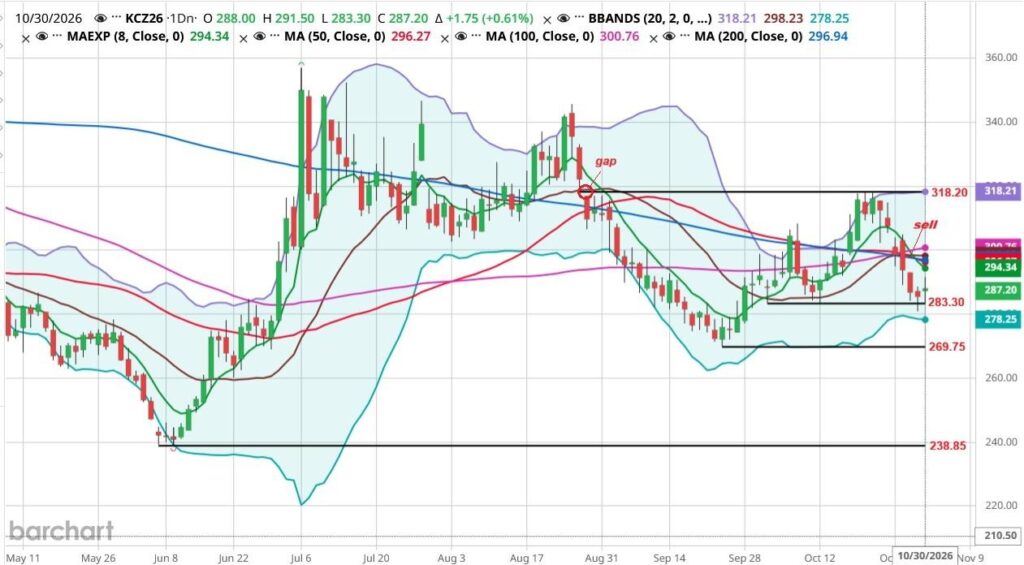
El pecio de café en Nueva York entró en una montaña rusa desde hace rato, alternando mínimos y máximos entre 269.75 y 317.90, un rango de casi 50 centavos, para por lo pronto terminar en 287.20 centavos el viernes.

La racha para abajo en la última semana fue debido al resultado de las elecciones presidenciales en Brasil, que ganó el presidente Lula da Silva, donde muchos habían esperado que ganara Flavio Bolsonaro, que estuvo arriba en la primera ronda. Ganó la democracia, perdió la economía. El mercado financiero reaccionó negativamente, haciendo bajar la paridad del real brasileño con el dólar americano. 

La tasa de cambio brincó de 5 a 5.4 reales por dólar, lo que incentivó a productores y exportadores a vender y fijar mucho café, haciendo bajar el precio en la bolsa de Nueva York. Las exportaciones de octubre en Brasil subieron fuertemente según cifras provisionales de Cecafé. Sin embargo, no influye mucho todavía en los inventarios certificados en la bolsa y por ende tampoco en la formación del precio.

Los descuentos para posiciones futuras se han abierto de nuevo un poco más, por lo que el mercado continua por lo pronto en posición de backwardation (ver el blog del 18 de octubre ¿Fin del backwardation?).

El precio subió ligeramente el viernes (+1.75), pero la candela es prácticamente un doji, quiere decir el mercado está indeciso si subir o bajar el precio. El jueves dio señal de venta (sell) y el precio ha caído debajo de los promedios móviles de 50, 100 y 200 días (todos en el rango de 296-301), que indica que una tendencia a la baja. Pisos importantes están justo debajo de 270 y 240.

Soportes: 299.95 (MA50), 292.60, 283.50, 280.80, 269.75, 260.15 y 238.85. Resistencias: 298.25 (eje), 304.90, 317.00-319.80 (gap) y 333.05.

En el Commitment of Traders report del viernes muestra que el sentimiento en la bolsa de Nueva York estuvo un poco más animado, pero con la baja del precio esta semana se puede esperar una tendencia contraria en el próximo reporte. 

El interés abierto de futuros y opciones combinados subió 17,614 contratos de 201,085 a 218,699. El interés abierto de solo futuros subió igual que la quincena pasada, de 166,525 a 170,306 el jueves pasado, un aumento de 3,781 contratos. El volumen diario promedió un poco menos de 40 mil sacos. 

La posición de los fondos primero se redujo 2,678 contratos de 3,697 a 1,019 neto corto. Los spreads, que reflejan el grado en que cada operador no comercial mantiene posiciones largas y cortas combinadas, subieron 15,096 contratos de 69,336 a 84,432, reflejando que muchos fondos no se han decidido si quieren agregar más largos o más cortos.

La posición larga de los comerciales quedó prácticamente igual, de 59,679 a 59,644. La posición corta de los comerciales primero subió de 91,170 a 97,650 (la semana en que subió el precio), pero luego bajó a 94,699 (la semana en que empezó a bajar el precio). 

Poco cambio en la posición de los fondos de índice, aumentaron su posición neta larga con 380 contratos de 34,518 a 34,898. 

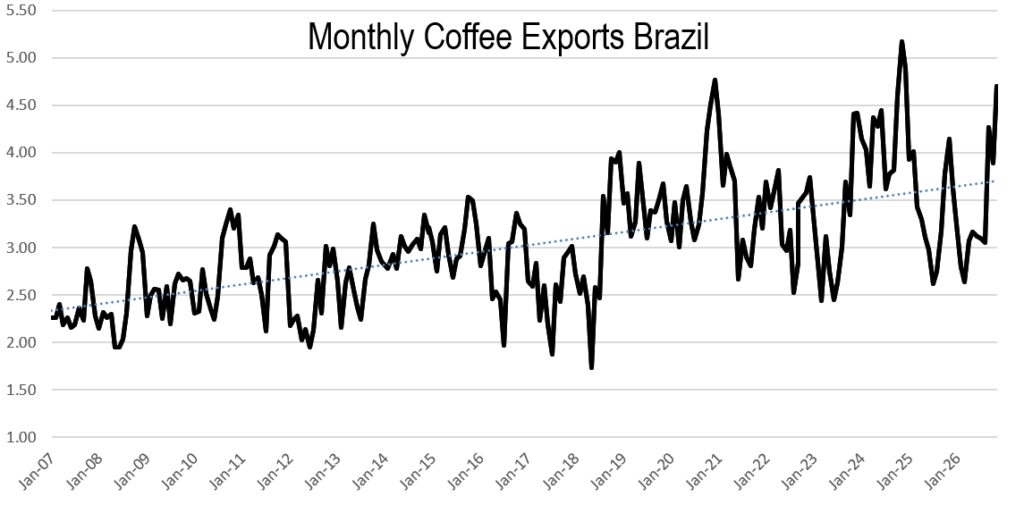
Las exportaciones de café de Brasil han aumentado a 4.7 millones de sacos en octubre, según cifras preliminares de Cecafé, 21% más que en septiembre y 13% más que en octubre del año pasado. Es el tercer nivel más alto desde octubre 2024 (5.2 millones) y noviembre 2020 (4.8 millones). Las cifras definitivas después de cerrar los registros suelen ser más altas.

El gráfico muestra una clara tendencia al alza en el volumen mensual de las exportaciones de café, de un promedio de menos de 2.5 millones de sacos hace 20 años a 3.5 millones en este momento. Por año es un momento del 50% o 14 millones de sacos, de 28 millones a un promedio de 42 millones en los últimos 5 años.

El aumento de las exportaciones continuará y se reforzará en el corto plazo, juzgando por la a emisión de certificados de origen: 5.2 millones de sacos en octubre, 28% más que los 4.1 millones en octubre 2025 y en septiembre pasado.

En algún momento este café también llegará a los almacenes de la bolsa de Nueva York y comenzará a presionará sobre el precio. Más del 80% de los 225 mil sacos al viernes está en Europa, sobre todo en Amberes. Brasil representa el 37% de este volumen con 83 mil sacos y hay 47.5 mil sacos pendientes de certificar. 

El café de Brasil puede llegar a Europa en un mínimo de 20 días, valuar y certificarlo puede tomar varias semanas si es mucho volumen. Quiere decir que en dos meses a partir de ahora la situación podría ser muy diferente. El volumen a certificarse dependerá también de los diferenciales para café lavado y semi-lavado de Brasil (en Nueva York el diferencial es -6) y de los premios para la primera posición sobre posiciones futuras.

Las exportaciones de Vietnam en septiembre han subido 53% comparado con el año pasado. El volumen exportado en 2025/26 fue de 33 millones de sacos, más que la producción de 30+ millones. Quiere decir que Vietnam ha estado soltando inventarios de cosechas anteriores.

Los inventarios certificados de Robusta en la bolsa de Londres han aumentado considerablemente en octubre a más de 1.1 millones de sacos y el precio ha bajado a cerca de 3,200 dólares por tonelada, el nivel más bajo desde principios de 2024. El arbitraje con café Arábica anda por 120-130 cts/lb, lo que es un incentivo para los tostadores de cambiar las mezclas y aumentar el porcentaje de Robusta. 

Jos Algra es consultor internacional con más de 40 años de experiencia en café y trabajar con organizaciones de productores.

Este blog fue publicado originalmente en Claase:

https://claase.org/analisis-de-los-precios-del-cafe

Does the roller coaster continue?

Commentary, Nov. 1, Jos Algra

The price of coffee in New York has been on a rollercoaster ride for some time now, fluctuating between lows and highs between 269.75 and 317.90, a range of almost 50 cents, before finally closing at 287.20 cents on Friday.

The downward trend over the past week was due to the outcome of the presidential elections in Brazil, which was won by President Lula da Silva, where many had expected Flavio Bolsonaro, who was ahead in the first round, to win. Democracy won, the economy lost. The financial market reacted negatively, causing the Brazilian real to fall against the US dollar.

The exchange rate jumped from 5 to 5.4 reais per dollar, which incentivised producers and exporters to sell and fix large quantities of coffee, driving down the price on the New York Coffee Exchange. October exports in Brazil rose sharply, according to preliminary figures from Cecafé. However, it doesn’t yet significantly influence the certified inventories on the exchange, and therefore not influence the price formation.

Discounts for futures positions have widened slightly again, so the market remains in backwardation for the time being (see the October 18 blog post, The end of backwardation?).

The price rose slightly on Friday (+1.75), but the candlestick is practically a doji, meaning the market is undecided about whether to move the price up or down. On Thursday, it gave a sell signal, and the price has fallen below the 50, 100, and 200-day moving averages (all in the 296-301 range), indicating a downward trend. Key support levels are just below 270 and 240.

Support: 299.95 (MA50), 292.60, 283.50, 280.80, 269.75, 260.15, and 238.85. Resistance: 298.25 (pivot), 304.90, 317.00-319.80 (gap), and 333.05.

The Commitment of Traders report on Friday shows that sentiment on the New York Exchange was slightly more upbeat, but with the price decline this week, a reversal of this trend can be expected in the next report.

Combined futures and options Open Interest rose 17,614 contracts, from 201,085 to 218,699. Futures-only Open Interest rose like the previous two weeks, from 166,525 to 170,306 last Thursday, an increase of 3,781 contracts. Daily volume averaged slightly less than 40 thousand bags.

The net short position of funds first decreased by 2,678 contracts, from 3,697 to 1,019. The Spreads, which reflect the degree to which each non-commercial trader holds combined long and short positions, increased by 15,096 contracts, from 69,336 to 84,432, reflecting that many funds have not yet decided whether to add more long or short positions.

The long position of commercials remained virtually unchanged, from 59,679 to 59,644. The short position of commercials initially increased from 91,170 to 97,650 (the week of the price rise), but then decreased to 94,699 (the week the price began to fall).

There was little change in the position of Index Funds, they increased their net long position by 380 contracts, from 34,518 to 34,898.

Brazilian coffee exports rose to 4.7 million bags in October, according to preliminary figures from Cecafé, 21% higher than in September and 13% higher than in October of last year. This is the third highest level since October 2024 (5.2 million) and November 2020 (4.8 million). Final figures, after the closing of registration, are usually higher.

The chart shows a clear upward trend in the monthly volume of coffee exports, from an average of less than 2.5 million bags 20 years ago to 3.5 million currently. Annually, this represents a 50% increase, or 14 million bags, from 28 million to an average of 42 million over the last five years.

The increase in exports will continue and strengthen in the short term, judging by the issuance of certificates of origin: 5.2 million bags in October, 28% more than the 4.1 million in October 2025 and last September.

At some point, this coffee will also reach the warehouses of the New York Futures Market and will begin to put pressure on the price. More than 80% of the 225 thousand bags as of Friday are in Europe, mainly in Antwerp. Brazil represents 37% of this volume with 83 thousand bags, and there are 47.5 thousand bags pending grading.

Brazilian coffee can reach Europe in a minimum of 20 days; valuing and certifying it can take several weeks if the volume is large. This means that in two months from now, the situation could be very different. The volume to be certified will also depend on the differentials for washed and semi-washed Brazilian coffee (in New York, the differential is -6) and on the premiums for the first position over future positions.

Vietnam’s coffee exports in September were up 53% compared to last year. Export volume in 2025/26 was 33 million bags, exceeding production of over 30 million bags. This suggests that Vietnam has been clearing out stocks from previous harvests.

Certified Robusta stocks on the London Futures Market increased significantly in October to over 1.1 million bags, and the price fell to around 3,200 dollars per tonne, the lowest level since early 2024. Arbitrage with Arabica coffee is currently around 120-130 cents/lb, incentivising roasters to change their blends and increase the percentage of Robusta.

Jos Algra is an international consultant with more than 40 years of experience in coffee and working with producer organisations.

This blog was originally published in Spanish in Claase:

https://claase.org/analisis-de-los-precios-del-cafe