Learning, experimenting and collaborating: Lessons from a visit to Côte d’Ivoire

A small chocolate factory where much of the work is still done by hand, a cooperative experimenting with growing mushrooms on cocoa waste, and conversations about how producer organisations can work more closely together. For Bas Huurman, former owner of The Chocolate Family and co-founder of SEM Foundation, his recent visit to Côte d’Ivoire was an opportunity to see first-hand how different initiatives are developing and where opportunities for future collaboration lie.

Bas travelled to Côte d’Ivoire with An Ha, Managing Director of Progreso, as part of the collaboration between SEM Foundation and Progreso. SEM Foundation has been involved in initiatives in cocoa-producing countries for more than ten years. Building on the background of the family business The Chocolate Family, the foundation aims to give something back to the communities that produce cocoa. Through its collaboration with Progreso, SEM Foundation also contributes to strengthening producer organisations and developing the cocoa value chain.

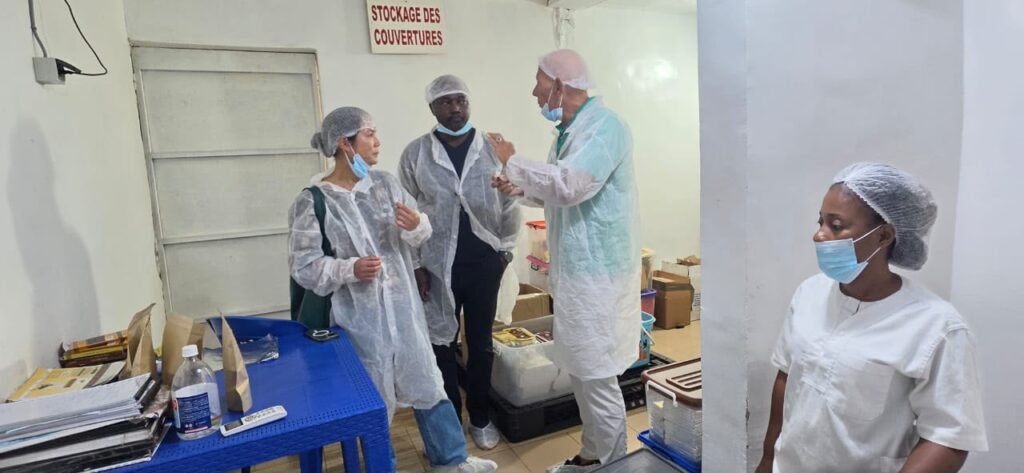
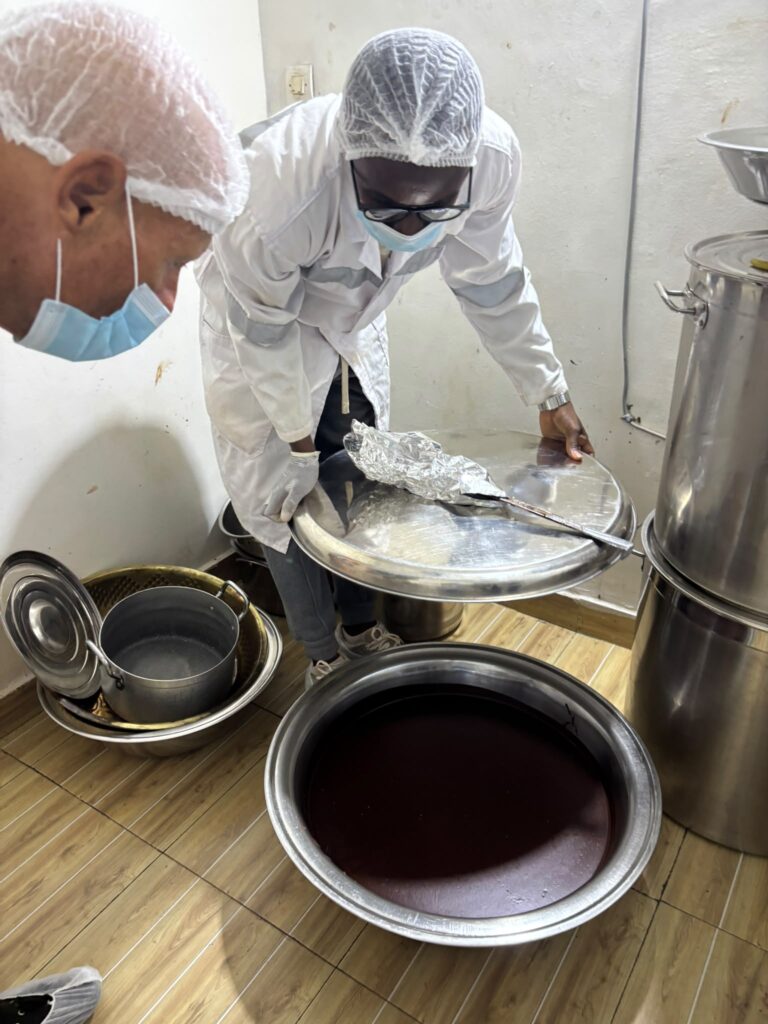
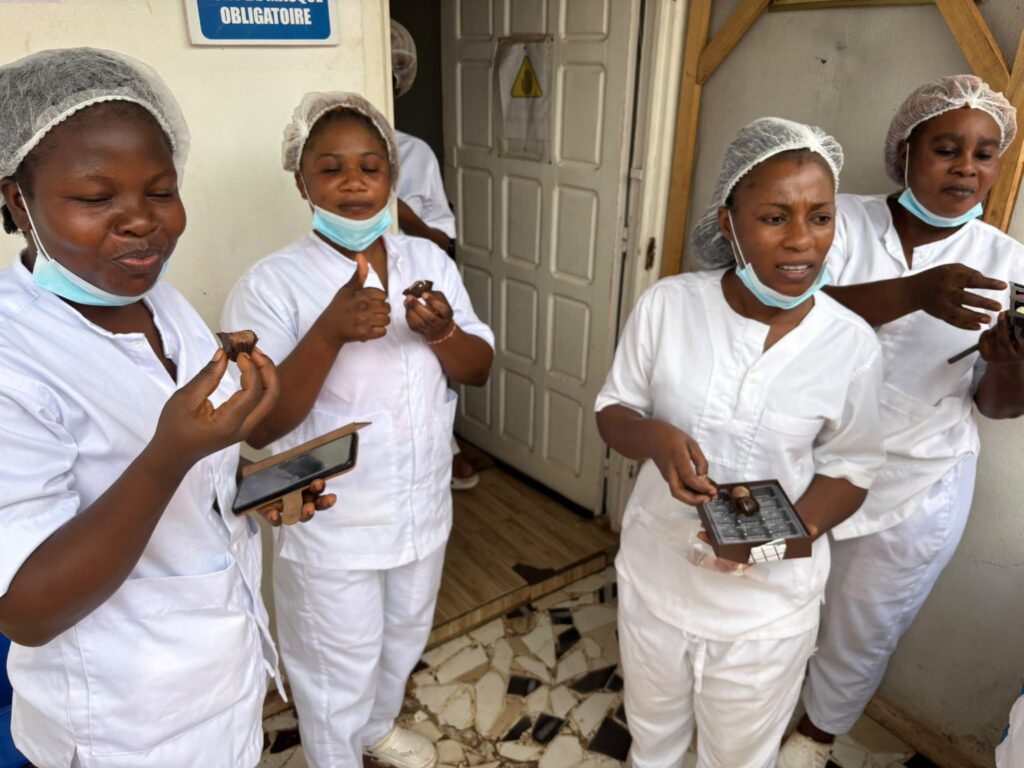
One of the visits that made the strongest impression on Bas was to Yecao, a small chocolate factory in which the cooperative CAMAYE holds a share. Located in Abengourou, the capital of the Indénié-Djuablin region in eastern Côte d’Ivoire, the factory produces organic cocoa products, semi-finished products and flavoured chocolates, including varieties with ginger, cashew, coconut and lemongrass.

Production is still in its early stages, and much of the work is carried out by hand. What impressed Bas most, however, were the people. “I really appreciated the dedication of the people and their love for the product,” he says.

He was equally struck by their curiosity. Bas had brought some chocolate products from Belgium and was surprised by the level of interest they generated. “It was as if they were a giant sponge. They couldn’t ask enough questions.” For him, this was a wonderful example of the energy and ambition he encountered throughout the visit.
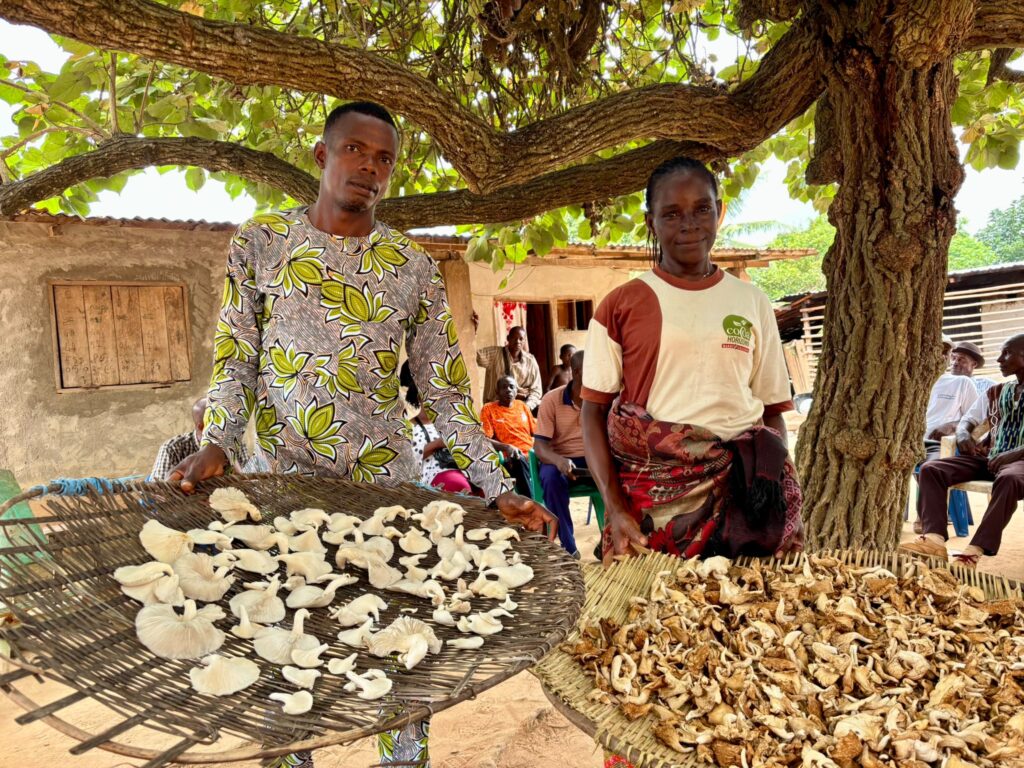
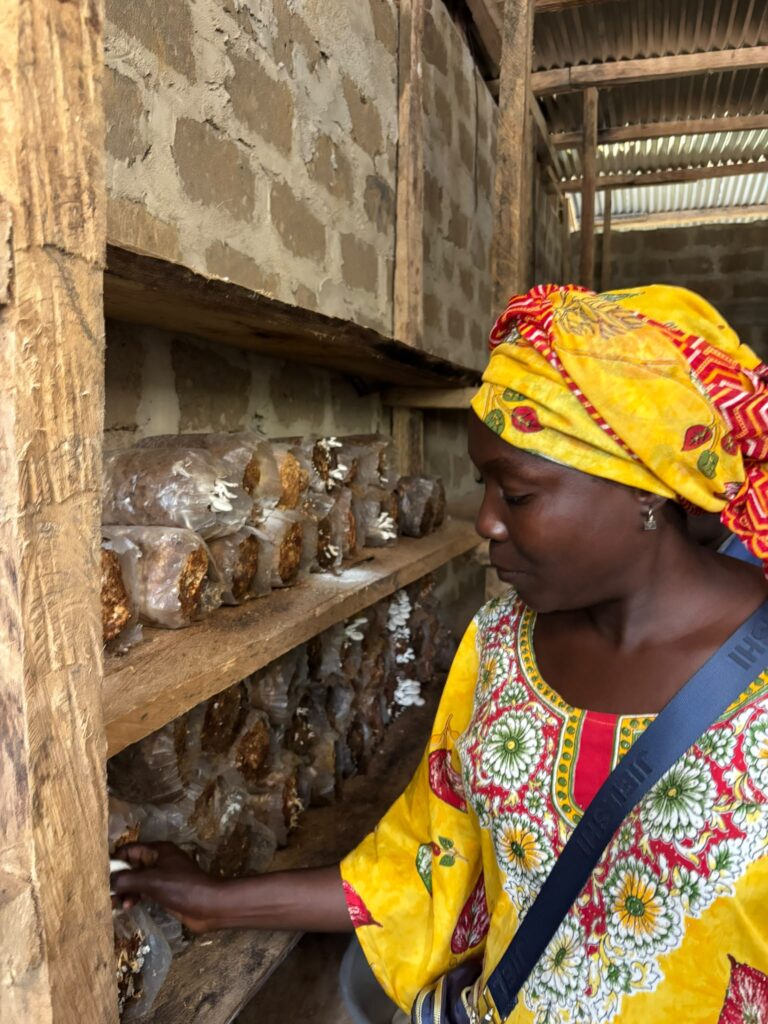
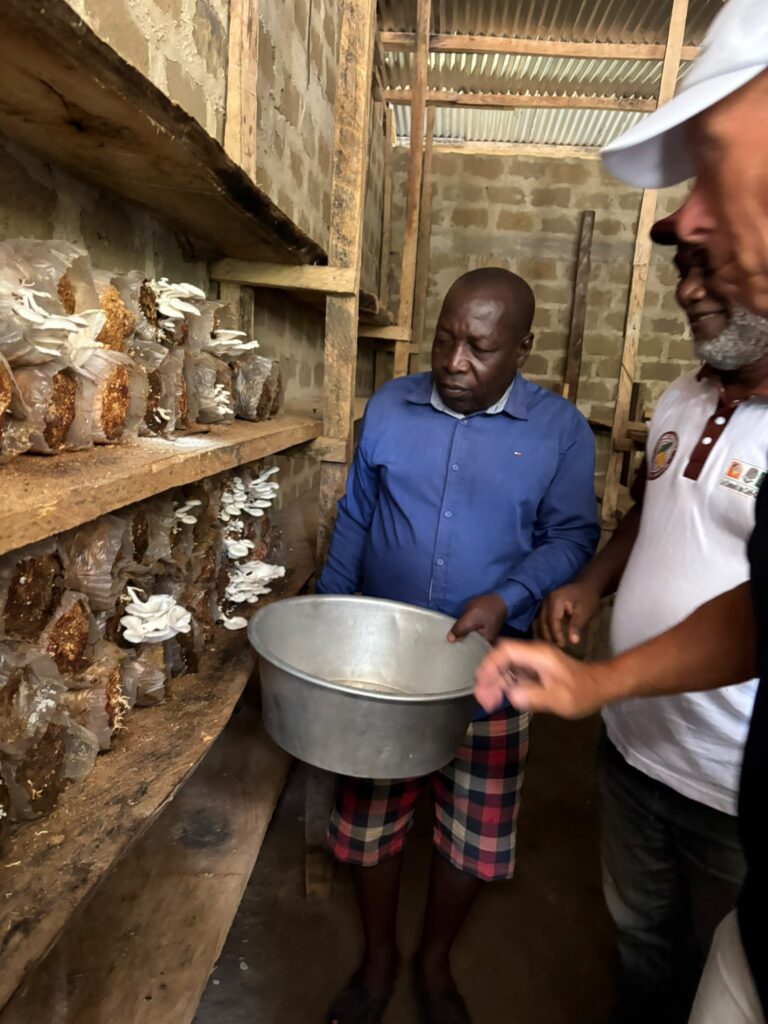
At the SCAOD cooperative in Diégonefla, Bas witnessed a different kind of innovation. There, the cooperative is experimenting with growing mushrooms using waste from cocoa production, turning a by-product into a potential additional source of income.

“I was very impressed by the way we were welcomed, but also by how grateful people were to have the opportunity to develop an additional income stream.”

According to Bas, these initiatives demonstrate that Côte d’Ivoire has opportunities beyond simply increasing cocoa production. At the same time, he sees considerable potential for better organisation and collaboration across the sector.
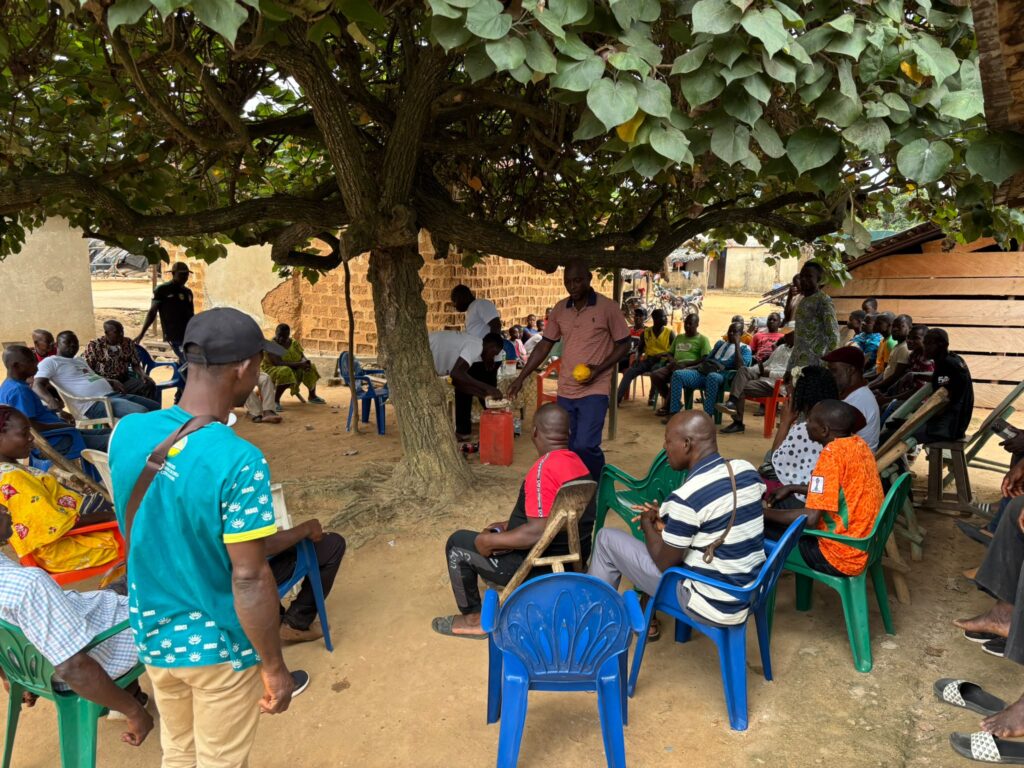
During his visit, a meeting had been planned with the chair of a cooperative involved in a merger process. Although the meeting could not take place due to the chair’s unexpected absence, the idea behind this collaboration remained an important part of Bas’s reflections on the visit.

Bas believes cooperatives stand to gain a great deal by seeing one another as colleagues rather than competitors. By joining forces, they could, for example, establish a joint marketing organisation and take on a more active role further along the value chain. The small chocolate factory he visited illustrates what can be achieved when producers explore ways to create more value from their own cocoa.

He also sees a role for organisations such as Progreso and SEM Foundation in making this happen. Their contribution goes beyond providing financial resources: they can bring different actors together, facilitate collaboration and help promising initiatives grow.

“It should create a ripple effect,” he says. If collaboration between cooperatives leads to better results, he believes it can inspire others to follow suit.

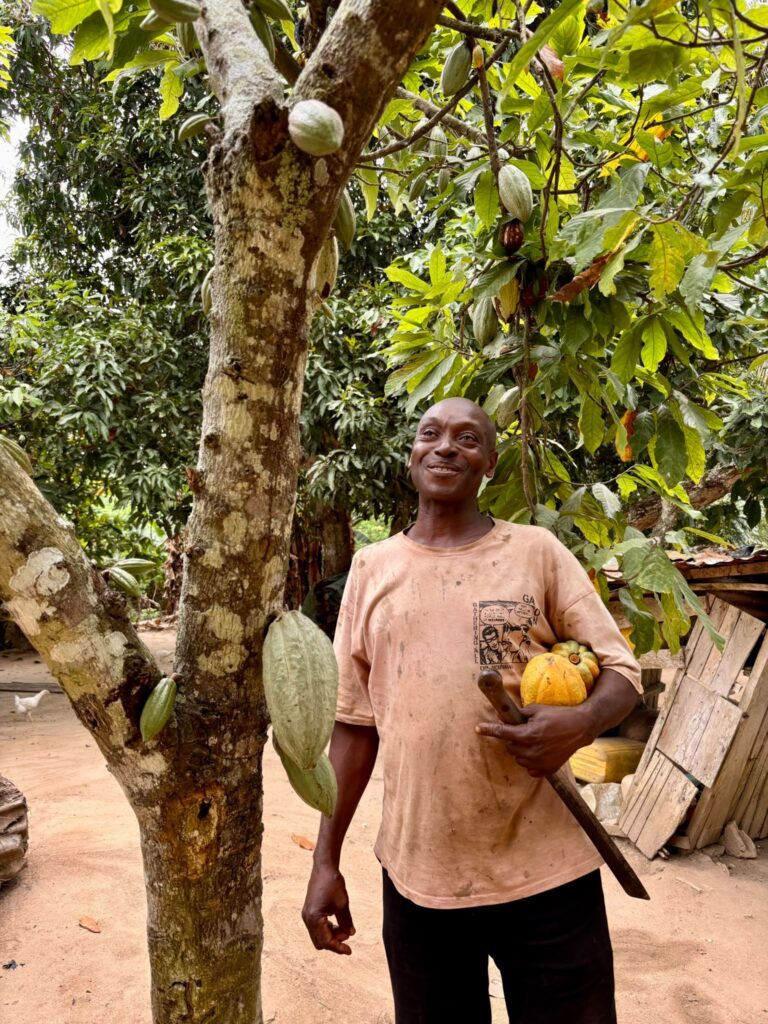
The visit reinforced Bas’s belief in the potential of Côte d’Ivoire, particularly if cooperatives work more closely together and receive stronger support to develop their businesses. It also reminded him, as a former chocolate entrepreneur, where chocolate really comes from: at the beginning of the value chain, with farming families cultivating small plots of land.

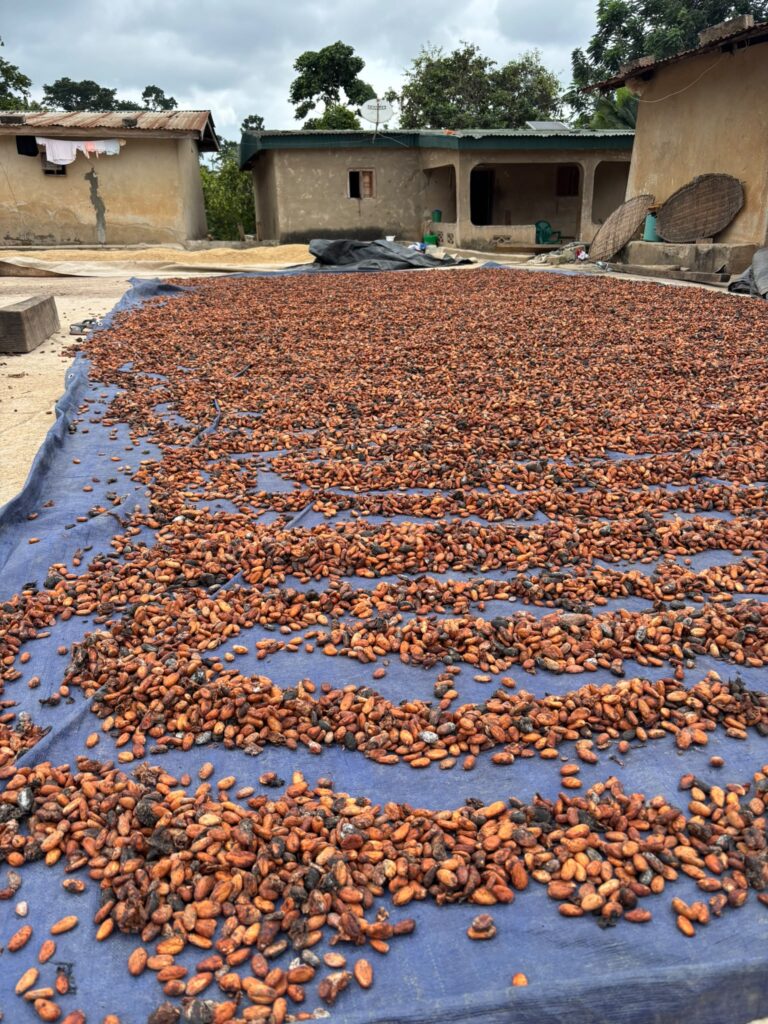
“One family has to make a living from one and a half hectares,” he explains. Families work together on their land and then bring their cocoa beans to the cooperative in large jute sacks.

For Progreso, the visit reinforced the importance of long-term collaboration with producer organisations. Building a stronger cocoa value chain requires more than financing. It also means supporting new ideas, connecting organisations and creating the space for people to experiment with new opportunities.
About SEM Foundation

SEM Foundation builds on the legacy of The Chocolate Family, supporting initiatives in cocoa-producing countries to give back to the communities behind cocoa production. Through its partnership with Progreso, the foundation helps strengthen cocoa producer organisations, encourage collaboration and support initiatives that diversify farmers’ incomes and contribute to a more resilient cocoa sector.

About Progreso Foundation

Progreso Foundation is a Dutch NGO that supports coffee and cocoa producer organisations in Africa, Latin America and Asia. By strengthening their business capacity, governance and access to finance and markets, Progreso helps cooperatives become more professional and resilient, contributing to improved livelihoods and more sustainable value chains for smallholder farmers.

Beyond working capital: Building resilient coffee and cocoa businesses in Indonesia

For coffee and cocoa producer organisations, access to finance can open up business opportunities. But when harvests are uncertain, production is affected by climate and markets are unpredictable, financing alone is not enough. Building resilient organisations requires strong management, transparent governance and solutions that respond to farmers’ needs.

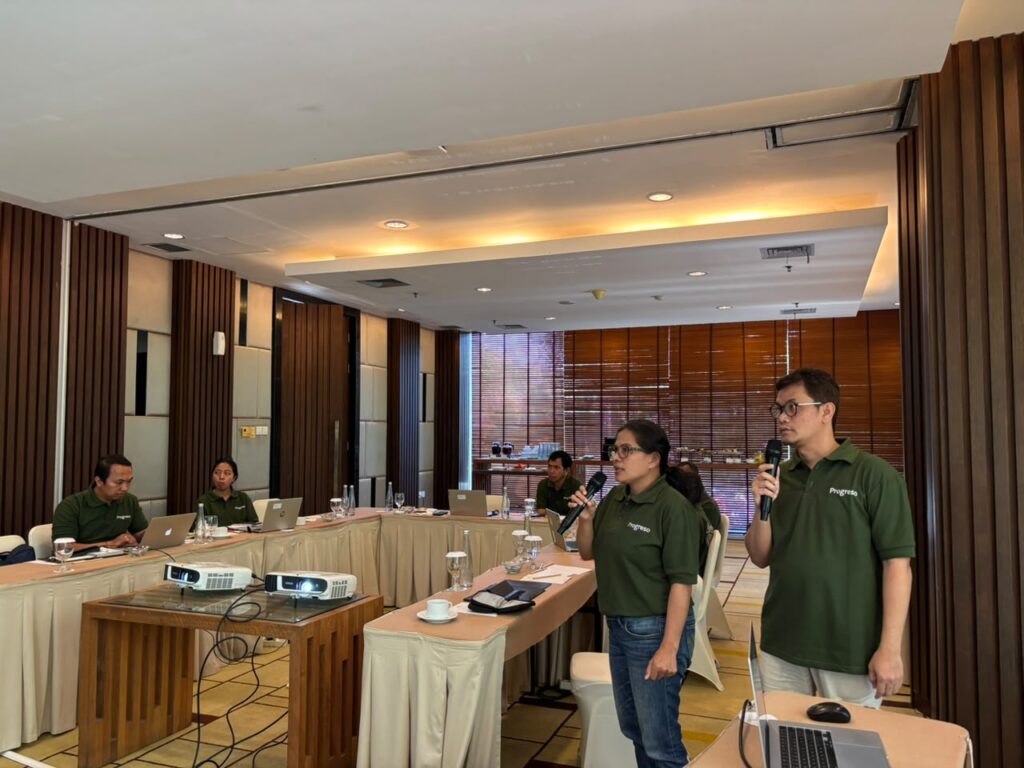
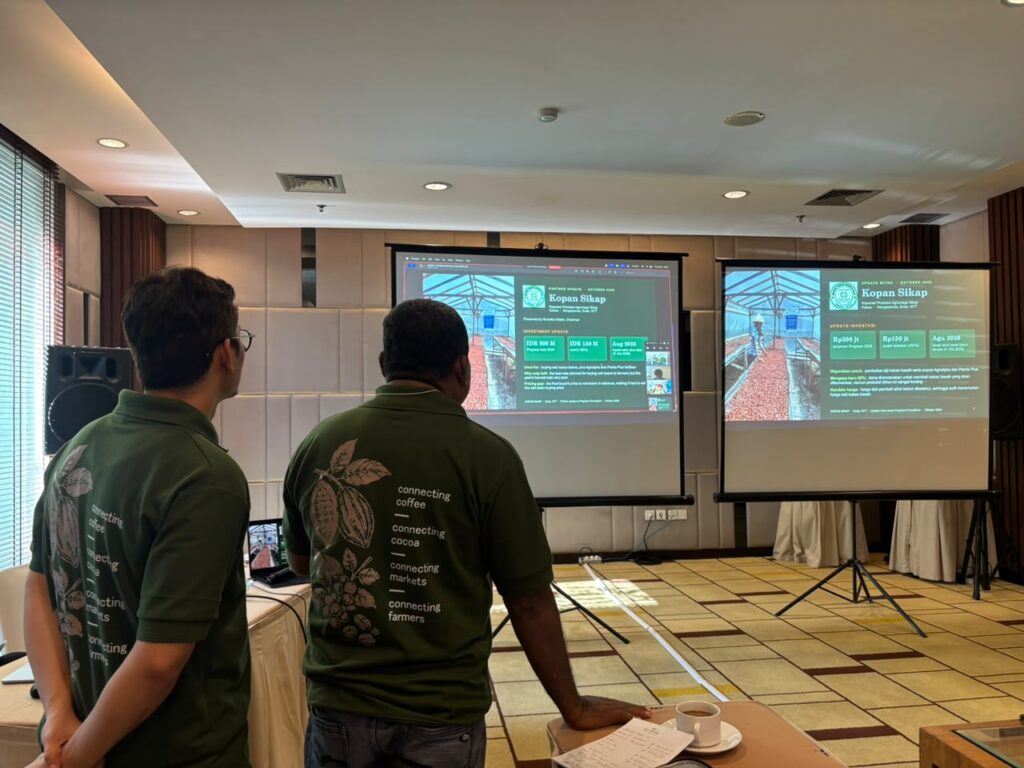
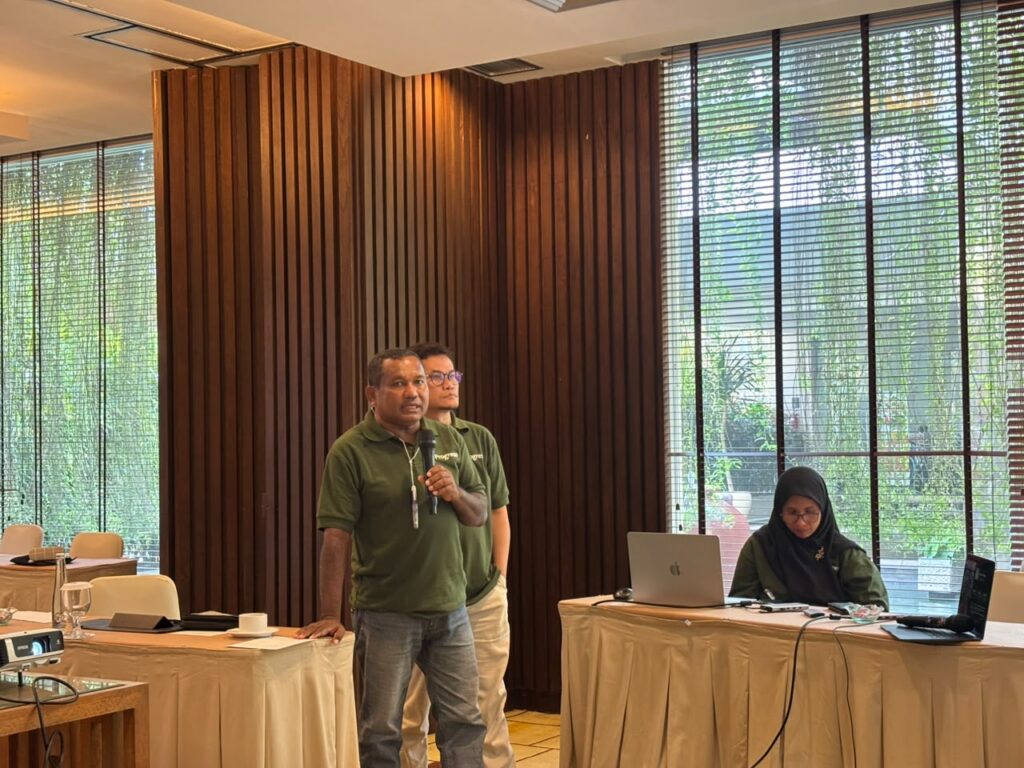
During a partner sharing session in Bali on 8 October 2026, Progreso representatives An Ha and Daan Mulder met in an online session with Indonesian coffee and cocoa partners to discuss their business progress, how they use working capital, the challenges they face and their priorities for the year ahead. The conversations offered a valuable reminder of the realities facing agricultural businesses and the importance of looking beyond financing alone.

Navigating an unpredictable growing season

For coffee and cocoa businesses, production depends on conditions that are not always within their control. For example, on the island of Flores, where the cocoa cooperative Kopan Sikap operates, production has been affected by difficult weather conditions, limited water and the impact of an earthquake. Lower harvests have made it harder for the cooperative to source the cocoa it needs to meet its business ambitions. However, the challenges have not diminished the partner’s determination to find a way forward. As one representative put it during the discussion:

“Things can change for the better, God will help, we are looking for a solution.”

This outlook reflects the importance of finding practical ways to adapt. For Kopan Sikap, priorities include improving its business planning, strengthening organisational capacity and finding ways to secure sufficient cocoa volumes while improving its readiness to reach new markets.

Coffee businesses face their own challenges. PT Kopi Toduri Jaya, based in Enrekang, South Sulawesi, reported that prolonged rainfall had contributed to lower coffee production, even as demand from existing and potential buyers increased. Sourcing from additional areas has been one way to respond to the supply shortfall. These experiences demonstrate how closely business performance is connected to production conditions, procurement strategies and access to markets.

Making working capital work

Working capital enables producer organisations and coffee businesses to purchase crops from farmers and cover the costs of processing and preparing products for sale. However, the amount of financing needed and how effectively it can be used depends on the realities on the ground. When harvests are smaller than expected, supply is uncertain or purchasing prices are difficult to match with selling prices, businesses may struggle to deploy their available working capital as planned.

During the sharing session, Progreso and its partners discussed the importance of aligning financing with harvest cycles, understanding market conditions and improving the information used to guide purchasing decisions. The discussion also highlighted the need to look beyond the immediate transaction. Sustainable businesses need to understand how their operations benefit farmers and how those farmers can participate in decisions that affect their organisations and livelihoods.

Strong organisations need more than finance

A key takeaway from the discussions was that financial support alone is not enough to build resilient farmer organisations. Cooperatives also need reliable financial records, transparent governance, clear responsibilities and effective purchasing systems. These foundations help organisations manage resources responsibly, make informed decisions and respond to changing circumstances. Progreso’s support therefore extends beyond financing. Its work with partners includes financial management training and coaching, governance support and assistance in strengthening organisational processes.

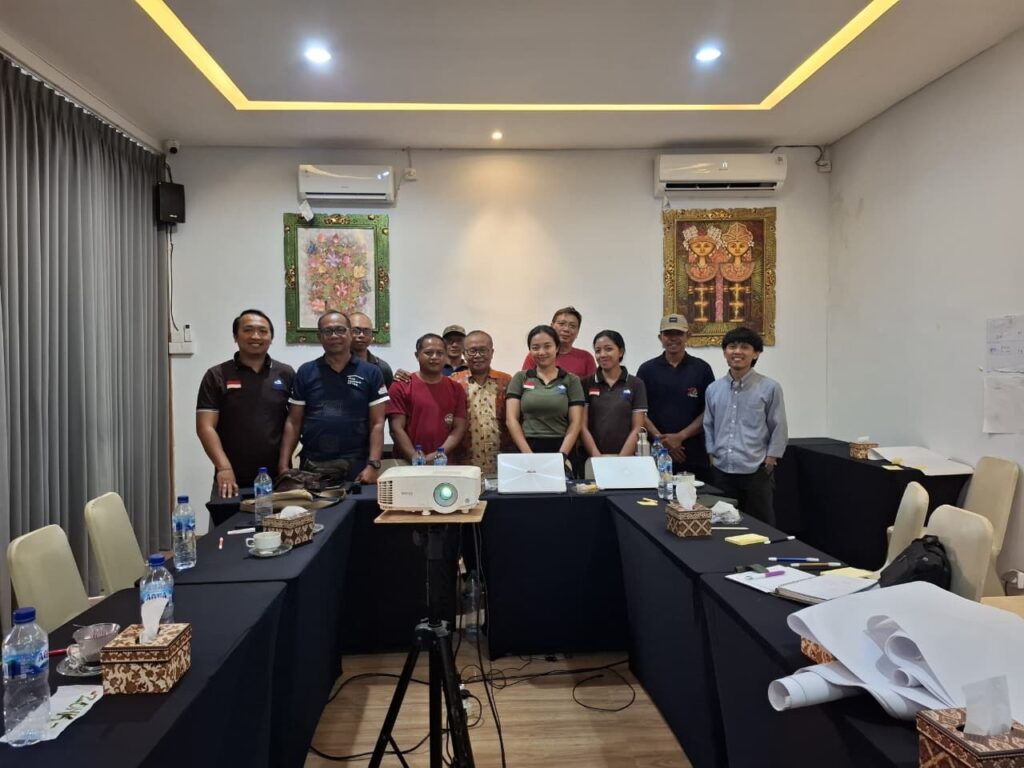
The recent financial workshop in Bali, for example, allowed representatives from MPT, Kopan Sikap and MAB to improve their practical use of accounting software and agree on follow-up actions. The sharing session complemented this work by creating space for partners to discuss how their businesses are performing, what support is working and where further improvements are needed.

Importantly, strong governance also means ensuring that farmers have a voice. Progreso emphasised the importance of understanding the community impact of its work and ensuring that farmers can participate in decisions about how their organisations use investments.

Looking ahead: Building resilience together

As the partners look towards 2027, their priorities reflect the interconnected nature of the challenges they face. Alongside financing, they identified needs related to financial and governance capacity, production and processing, farmer services and market access. For some, this means improving processing facilities or strengthening farmer training. For others, it means refining internal procedures, developing business plans or building connections with new buyers. The specific solutions will differ between organisations, depending on their context, business model and needs. What connects them is the importance of combining financial resources with the knowledge, systems and relationships needed to use them effectively. For Progreso, listening to partners is an important part of this process. By understanding their experiences and ambitions, the organisation can continue working with them to identify practical ways to strengthen their businesses and better serve the farmers they work with.

Building resilient coffee and cocoa businesses is not achieved through a single loan or training session. It is an ongoing process that brings together finance, organisational development, farmer participation and market opportunities, helping producer organisations navigate uncertainty and work towards a more sustainable future.

From shared vision to action: Strengthening coffee and cocoa cooperatives in Indonesia

What does it take to build a stronger cooperative? For coffee and cocoa producers in Indonesia, it starts with a shared vision, clear priorities and a practical plan.

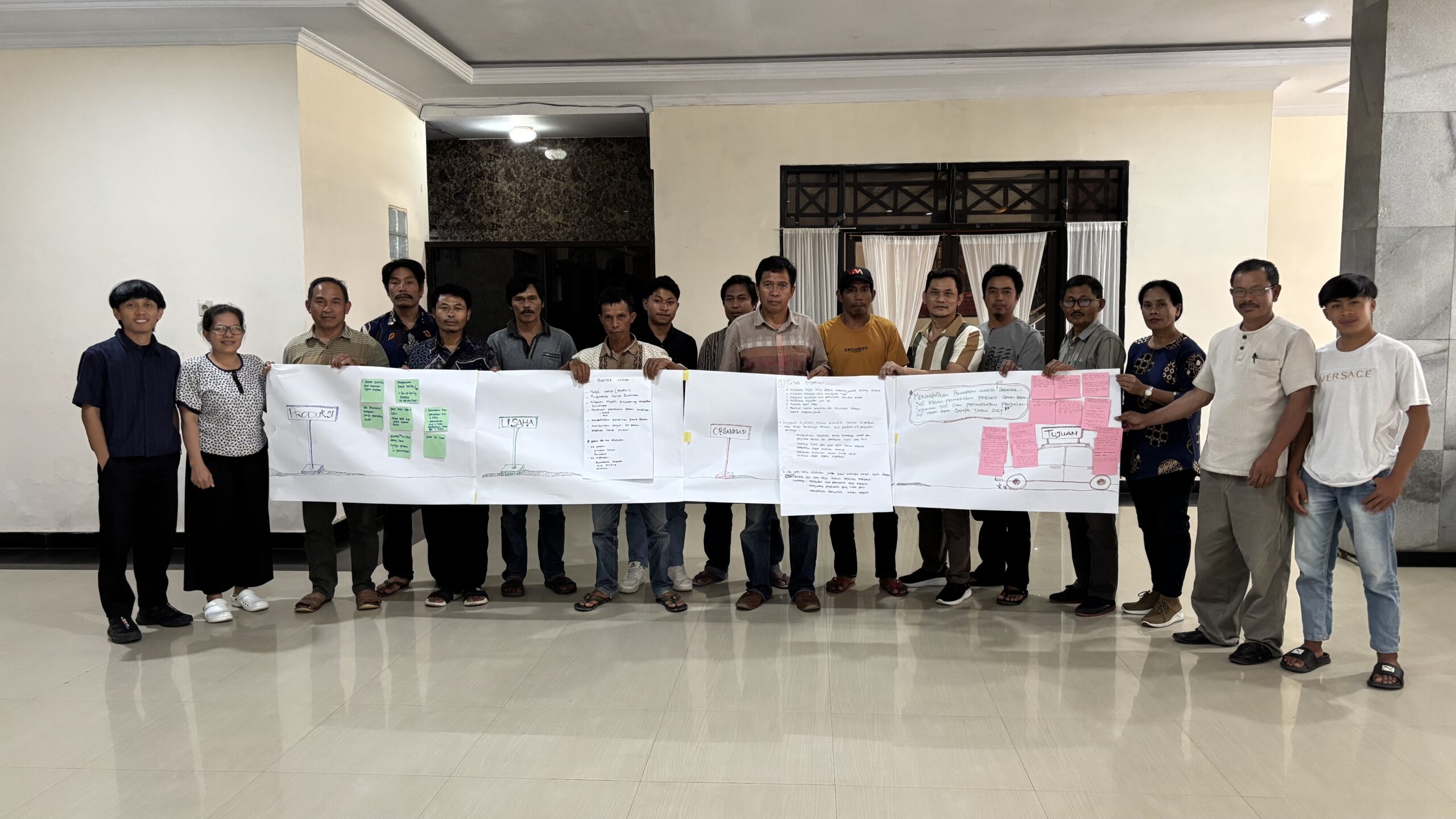
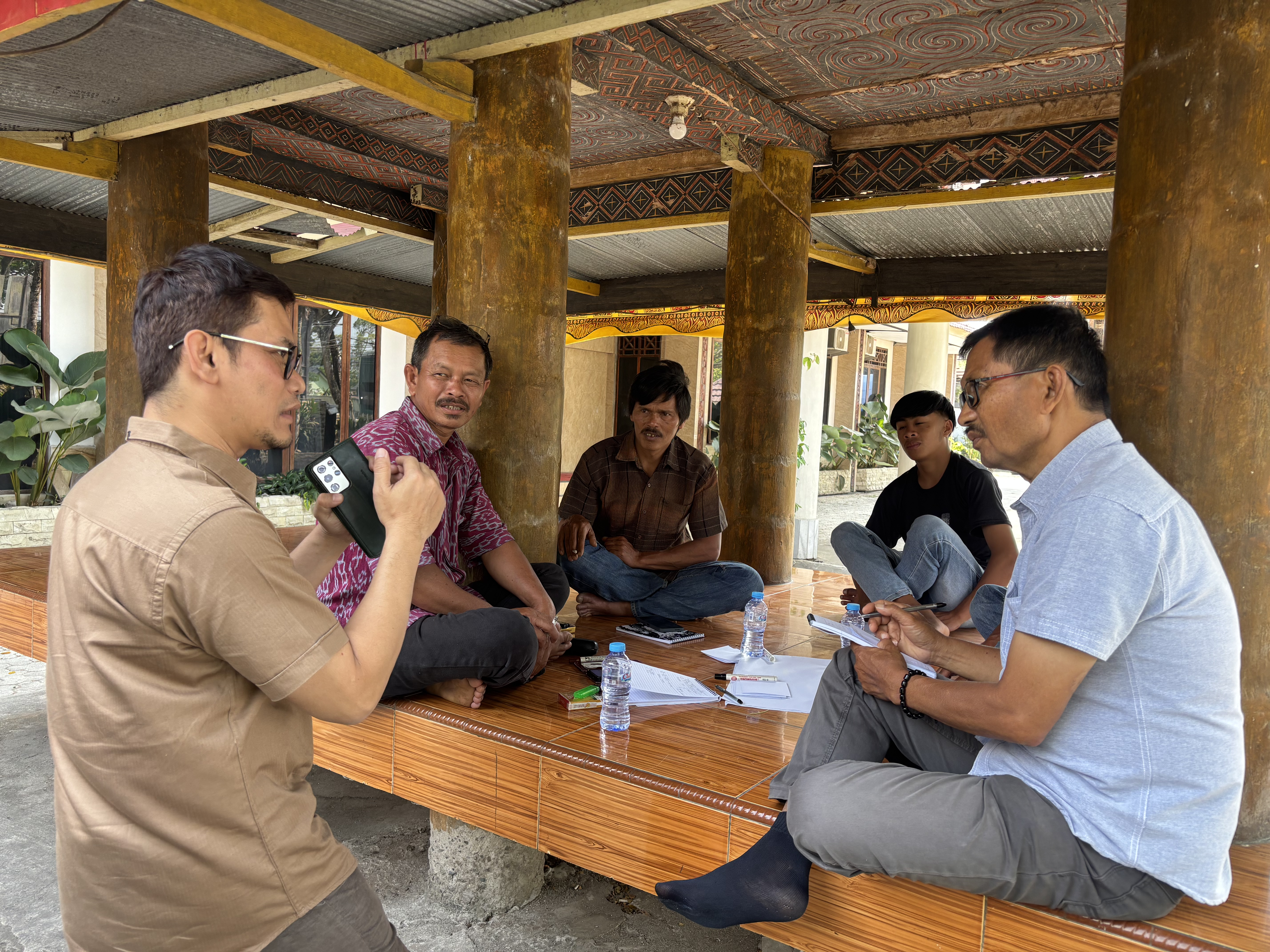
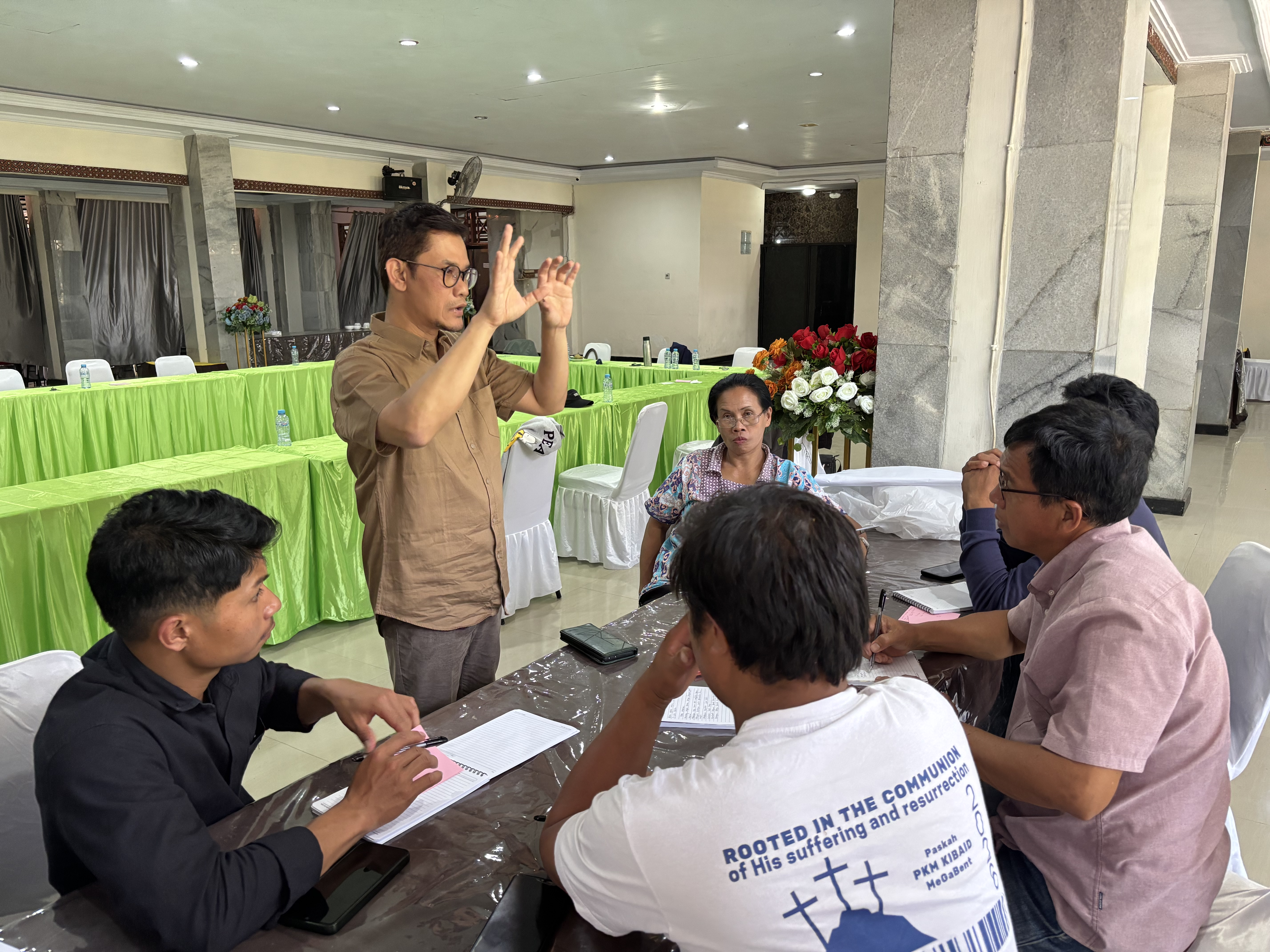
In late September and early October 2026, Progreso facilitated governance and business-planning workshops with two partner cooperatives: Mitra Petani Toraja (MPT) in South Sulawesi and Koperasi Manik Amerta Buana (MAB) in Bali. Bringing together board members, supervisors, managers and farmers, the workshops helped participants define their ambitions and identify priorities for the coming years.

Turning ambitions into concrete goals

Participants worked together to establish shared goals for their cooperatives. For MPT, the ambition is to increase active members’ income by 30% by 2029, supported by a 30% increase in green bean production and a 10% increase in green bean sales. Priorities in its draft business plan include strengthening cooperative governance and member services, establishing an input-supply unit and developing a coffee nursery. In Bali, MAB set a goal of improving members’ welfare through stronger collective cocoa marketing, with members increasing dried cocoa production by 20 tonnes by 2029. Its proposed priorities include strengthening relationships with regular buyers, improving production capacity and developing clearer internal procedures.

From planning to implementation

Both workshops addressed three areas: institutional development, business operations and production. Participants identified priority activities, discussed implementation responsibilities and began preparing budgets. MPT developed a draft business plan and a 2027 budget with activities, timelines and assigned responsibilities. MAB developed its draft business plan for 2027–2029 and began preparing its 2027 budget, with further coaching planned to complete the process.

Both business plans are still being finalized and will be submitted for approval at their respective Annual Members Meetings (RAT). Once approved, they will guide the cooperatives’ activities over the coming years. As MAB participant Made Sukarta reflected: “We now understand better how to prepare the cooperative’s business plan and budget so that our business is more directed going forward. We hope what we have drawn up can truly be carried out.”

Strengthening the foundations for growth

Putting business plans into practice also requires clear roles and effective internal procedures. Both cooperatives are currently finalizing institutional Standard Operating Procedures (SOPs) to strengthen their organizational and operational management.

Through participatory workshops and continued coaching, Progreso supports coffee and cocoa producer organizations in developing the management capacity needed to implement their plans and work towards improved member livelihoods.

Bwindi Coffee Growers Cooperative Society: Coffee farming and conservation around Bwindi

In the hills surrounding Bwindi Impenetrable National Park in Uganda, coffee production offers farmers an opportunity to build livelihoods while living alongside one of the country’s most important protected forests.

Limited income opportunities have historically contributed to some community members relying on forest resources for their livelihoods. Today, coffee farming provides an alternative source of income, including for some former poachers who have turned to agriculture.

Bwindi Coffee Growers Cooperative Society brings together 859 farmers, including 205 young people, who grow Arabica and Robusta coffee in the area. For many farming households, coffee income helps cover everyday expenses such as school fees, healthcare and other household needs.

The cooperative operates in a landscape of particular conservation importance. Bwindi Impenetrable National Park is home to endangered mountain gorillas, and the livelihoods of surrounding communities are closely linked to the long-term sustainability of the area. By providing farmers with an opportunity to earn an income from their farms, coffee can contribute to reducing economic pressures on forest resources.

Supporting coffee farmers and protecting the forest

For the farmers of Bwindi Coffee Growers Cooperative Society, coffee is both an agricultural activity and a source of income for their families. Strengthening these livelihoods can help create economic opportunities for communities living alongside the forest, while contributing to wider efforts to protect the surrounding landscape.

The coffee featured in the Progreso auction comes from farmers building their livelihoods around coffee in the communities surrounding Bwindi Impenetrable National Park.

A warm welcome for Albertino Huancas Julca, our new Agroforestry Expert for Peru

Please welcome Albertino Huancas Julca to the Progreso Foundation team as our new Agroforestry Expert for Peru.

Albertino is an agricultural technician with many years of experience working with farming families and organizations across strategic value chains, including coffee and cocoa. His work has taken him into the field with cooperatives, producer associations and NGOs, supporting agroforestry systems, local businesses and initiatives that strengthen rural livelihoods.

He joined Progreso because he shares our belief that agroforestry can help farming families increase their incomes while protecting forests and biodiversity. In his new role, Albertino will work closely with producer organizations in Peru to support the adoption of profitable and sustainable agroforestry systems and help them respond to new market requirements, including the EU Deforestation Regulation (EUDR). He will also bring his knowledge of the local context to help build stronger connections between Progreso’s global team and farming communities.

Beyond his work, Albertino is a passionate coffee lover. With training in coffee cupping, he particularly enjoys sharing a good cup with the people who produce it. He is also studying Industrial Engineering, driven by his belief that there is always something new to learn.

And when he is not working or studying? You’ll probably find him playing football or out hiking. His favourite food is chicharrón de chancho, and his four-legged companion is Doki.

Welcome to the team, Albertino!

Ugandan coffees come to the Beyco online auction

On 2 December 2026, Beyco by Progreso Foundation and V Auction by Vollers will host an online auction featuring selected coffees from eight Ugandan cooperatives.

From the volcanic slopes of Mount Elgon to the foothills of the Rwenzori Mountains and the communities surrounding Bwindi Impenetrable National Park, these coffees come from very different landscapes and from cooperatives with equally diverse stories.

The participating cooperatives are Bushika Integrated Area Cooperative Enterprise (BIACE), Butta Farmers’ Cooperative Society, Mt. Elgon Agroforestry Communities Cooperative Enterprise (MEACCE), Nyamirima Mutegaya Cooperative Society, Rwenzori Organic Farmers Mountain Harvest Cooperative Society (ROCS), Bundikakemba, Kilhubo and Bwindi Coffee Growers Cooperative Society.

Behind each lot are farmers and cooperative teams working to improve both the coffee they produce and the businesses that connect them to the market.

  • At Bushika, farmers on the slopes of Mount Elgon are combining coffee production with agroforestry and income diversification. More than two million trees have been planted, alongside activities such as beekeeping and banana wine production.
  • At Butta, farmers are taking a regenerative approach to coffee production. Through the cooperative’s Wonder Farms initiative, they are improving soil health, producing natural fertilisers and planting improved coffee varieties, while the cooperative’s SACCO provides access to finance for farm investments.
  • At MEACCE, the focus extends beyond the coffee itself. The cooperative is investing in the people who sort and prepare the coffee, many of them women, with measures such as protective equipment, improved working conditions and childcare facilities.
  • In Ibanda, Nyamirima Mutegaya is a young cooperative building its export business while creating opportunities for women and young people to take on leadership and management roles.
  • Meanwhile, ROCS is developing its position in the Rwenzori coffee sector. With more than 1,000 members, the young cooperative is expanding its processing capacity and looking to strengthen direct connections with specialty coffee markets.
  • And around Bwindi, coffee is part of a wider story about livelihoods and conservation. For farmers living alongside one of Uganda’s most important forests, coffee can provide an alternative source of income and reduce economic pressure on the forest.

These are just some of the stories behind the coffees going under the hammer. Through its work with these cooperatives, Progreso supports improvements in agronomy, post-harvest handling, quality control, traceability and market access. The auction is a next step: an opportunity to bring these coffees to international buyers, give cooperatives greater visibility and create new commercial relationships that can develop beyond a single transaction.

In the coming weeks, we’ll introduce the participating cooperatives and the people behind the coffees, and share more about the lots, samples and how to participate.

Save the date and visit the auction website: https://beycoauctions.v-auction.com/en/lots/auction/beyco-auction-2026

Entre bandas

Comentario, 04 de oct, Jos Algra

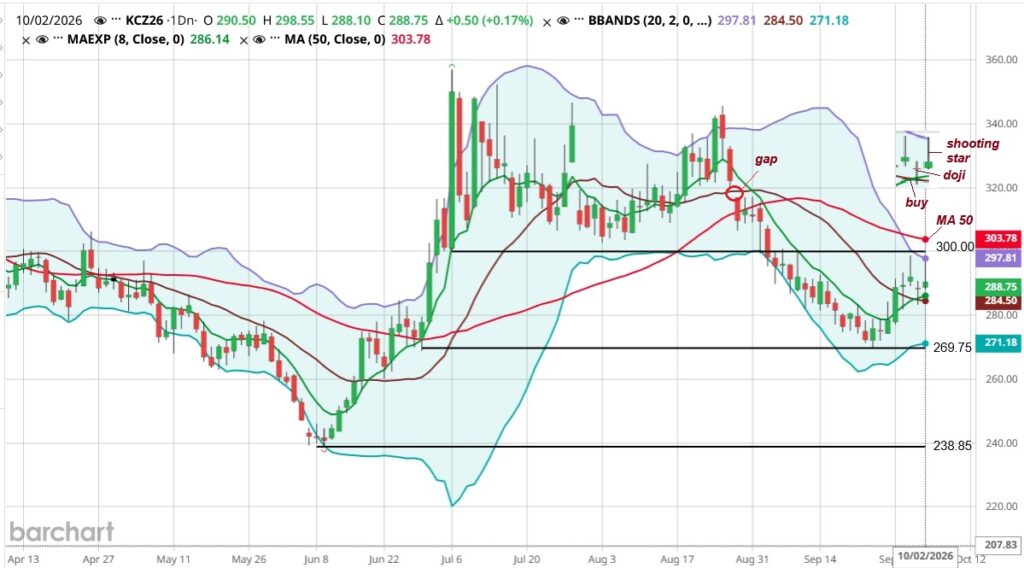
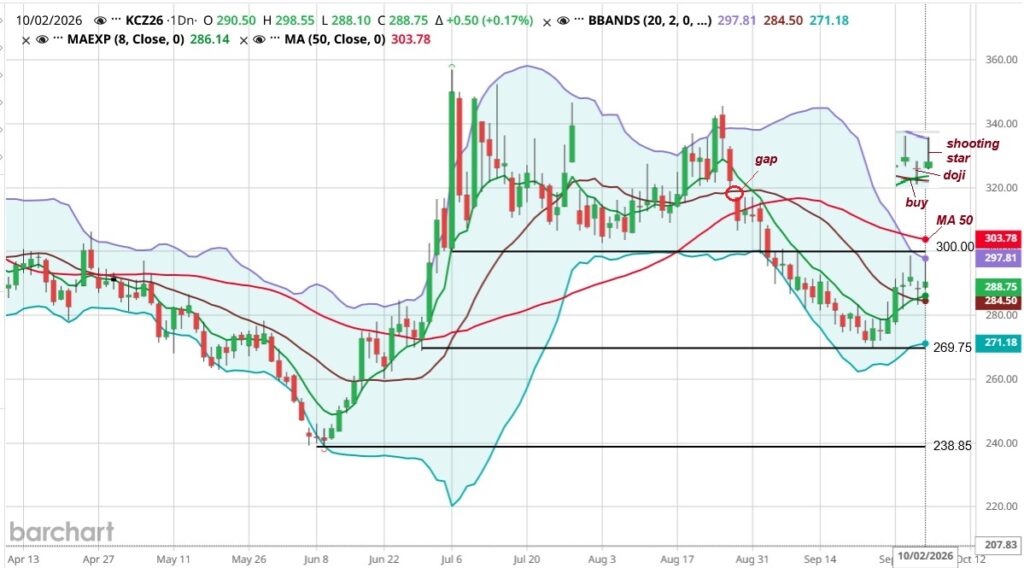
El pecio de café en Nueva York siguió bajando hasta topar en 269.75. Después comenzó a subir hasta tocar 298.80 el miércoles. Jueves un bajón hasta 283.30, pero que terminó en una indecisión qué rumbo tomar. Viernes se retomó el viaje al alza, pero topó en 298.55, retrocedió y cerró en 288.75.

El precio de café estuvo bajo presión por el gran aumento de la producción esperada en esta cosecha, sobre todo en Brasil. Después en el sentimiento cambió y el precio comenzó a subir. Poca precipitación en Brasil durante la época de floración puede afectar la producción en el ciclo 2027/28. El debilitamiento del dólar contribuyó al aumento del precio de café. De fondo tenemos la incertidumbre sobre el posible impacto de “Súper El Niño” y de la situación geopolítica.

Hay una serie de indicadores que son contradictorios y que confunden. El gráfico diario pasó de sobrevendido durante un mes a sobrecomprado en la última semana, que podría dar lugar a una corrección. Del miércoles al jueves una señal de compra (buy), que es alcista. El jueves un doji que indica indecisión, pero ligeramente inclinando a bajista. El viernes primero un aumento del precio de más de 10 centavos, pero luego una baja de casi los mismos 10 centavos, formado un shooting star, lo que indica una posible reversión bajista tras una tendencia alcista. Se sigue muy por debajo del promedio móvil de 50 días (MA 50).

¿Para dónde se va a romper la banda actual del precio? Se ha roto el piso de 280 centavos, pero se ha formado uno nuevo alrededor de 270. Si se rompe el precio puede bajar hasta el siguiente soporte de cerca de 240. Hacia arriba hay un techo por los 300 centavos, que no se ha logrado superar. Falta la bola de cristal.

Soportes: 283.30, 269.75, 260.15 y 238.85. Resistencias: 298.80, 300.25, 303.80 (MA50) y 316.90-319.80 (gap).

En el Commitment of Traders report el interés abierto de futuros y opciones combinados subió 5,220 contratos de 192,298 a 197,518. El interés abierto de solo futuros subió 6,315 contratos de 151,575 a 157,890 el jueves pasado. El volumen diario promedió 25 mil contratos.

La posición de los fondos primero se amplió 4,756 contratos de 1,716 a 6,472 neto corto, pero luego se redujo 2,979 contratos a 3,493 neto corto. Los spreads, que reflejan el grado en que cada operador no comercial mantiene posiciones largas y cortas combinadas, subieron 2,188 contratos de 65,275 a 67,463.

La posición larga de los comerciales subió 4,588 lotes de 54,985 a 59,573. La posición corta de los comerciales subió 1,257 lotes de 89,747 a 91,004. Los tostadores siguieren fijando contratos con el precio a la baja, los productores le entraron cuando el precio empezó a subir.

Los fondos de índice bajaron su posición neta larga con 1,194 contratos de 35,137 a 33,943.

El sentimiento en la bolsa de Nueva York se ha vuelto un poco menos negativo.

Los stocks certificados con la bolsa de Nueva York tuvieron su nivel más bajo en agostos con 223,976 sacos, el nivel más bajo desde febrero 1999. En septiembre subieron 36,678 sacos a 260,654, principalmente por la entrada de 59,909 sacos de Brasil (total 66,657). Hay analistas que afirman que si los stocks suben a 500 mil sacos, el precio de la bolsa se va a desplomar. Ese nivel se alcanzó en marzo-abril de este año.

CONAB ajustó su pronóstico de cosecha 2026/27 de 66.7 a 67.6 millones de sacos, 48.2 millones de Arábica y 19.4 millones de Robusta. CONAB suele tener uno de los pronósticos de cosecha más bajos, solo IBGE pronostica menos: 66.8 millones de sacos. El promedio de los pronósticos es 72.6 millones de sacos con un rango de 66.8 a 76.1 millones.

Según el reporte provisional de Cecafé Brasil exportó en septiembre 3.7 millones de sacos, 12% menos que en agosto (4.2 millones) y 3% menos que en septiembre 2025 (3.8 millones).

Se dice que las bodegas en Brasil están repletas de café y que los compradores ya no quieren recibir café por falta de capacidad de almacenamiento. Se dice también que hay muchas bodegas nuevas en construcción.

En el Coffee Dinner esta semana en Suiza hubo consenso que la situación en Perú es muy crítica, peor que en los últimos años. Fue el principal tema de conversación. Ya lo habíamos reportado en el blog anterior. Poco café y muchos defaults y los diferenciales se han disparado hasta +70/+80, aunque algunos traders comentan que esos diferenciales los pueden pedir, pero nadie los paga y los compradores no se atreven a contratar más café de Perú por el riesgo.

Todos se han vuelto hacia México y Centroamérica para comprar café. Se dice que la cosecha se ha adelantado, pero no es suficiente para cubrir la demanda a cortos plazo. Además, la región se mantiene relativamente seca debido a El Niño, que va a desarrollar su mayor fuerza hacia el fin del año, lo que puede afectar el volumen de cosecha. Los que tienen café disponible para embarques prontos están haciendo su agosto.

Los compradores tampoco logran cubrir el calendario de compras para el primer trimestre de 2027. El comercio y la industria de café se están poniendo muy nerviosos.

Una nota alegre para los compradores: ahora que está arrancando la cosecha principal, los diferenciales para Colombia se han suavizado … 2-3 centavos sobre alrededor de +80 para un Excelso!

Jos Algra es consultor internacional con más de 40 años de experiencia en café y trabajar con organizaciones de productores.

Este blog fue publicado originalmente en Claase:

https://claase.org/analisis-de-los-precios-del-cafe

Between bands

Commentary, Oct. 04, Jos Algra

The price of coffee in New York continued to fall, bottoming out at 269.75. It then began to rise, touching 298.80 on Wednesday. Thursday saw a drop to 283.30, though the day ended with uncertainty regarding the market’s direction. On Friday, the upward trend resumed, but the price hit a ceiling at 298.55 before pulling back to close at 288.75.

Coffee prices were initially under pressure due to the significant increase in expected production for this harvest, particularly in Brazil. Sentiment later shifted, and prices began to rise. Low rainfall in Brazil during the flowering season could impact production for the 2027/28 cycle. A weakening dollar also contributed to the rise in coffee prices. Underlying these movements is uncertainty regarding the potential impact of a “Super El Niño” and the geopolitical situation.

There is a number of contradictory and confusing indicators. The daily chart shifted from oversold territory—where it had been for a month—to overbought in the last week, a move that could trigger a correction. A “buy” signal (bullish) appeared between Wednesday and Thursday. Thursday saw a “doji” pattern indicating indecision, though with a slight bearish tilt. On Friday, the price initially rose by more than 10 cents but then fell by nearly the same amount, forming a “shooting star” pattern; this suggests a potential bearish reversal following an uptrend. The price remains well below the 50-day moving average (MA 50).

In which direction will the current price range break? The 280-cent floor has been broken, but a new one has formed around 270. If this level breaks, the price could drop to the next support near 240. On the upside, there is a ceiling around 300 cents that has not yet been breached. All that’s missing is a crystal ball.

Support: 283.30, 269.75, 260.15, and 238.85. Resistance: 298.80, 300.25, 303.80 (MA50), and 316.90–319.80 (gap).

In the Commitment of Traders report,, combined futures and options Open Interest rose by 5,220 contracts, from 192,298 to 197,518. Futures-only Open Interest increased by 6,315 contracts from 151,575 to 157,890 last Thursday. Daily volume averaged 25 thousand contracts.

Managed Money‘s position initially widened by 4,756 contracts (from a net short of 1,716 to 6,472) but subsequently narrowed by 2,979 contracts to a net short of 3,493. Spreads, reflecting the extent to which each non-commercial trader holds combined long and short positions, rose by 2,188 contracts, from 65,275 to 67,463.

Commercial long positions increased by 4,588 lots, from 54,985 to 59,573. Commercial short positions rose by 1,257 lots, from 89,747 to 91,004. Roasters continued to lock in contracts while prices were low, whereas producers entered the market when prices began to rise.

Index funds reduced their net long position by 1,194 contracts, from 35,137 to 33,943.

Sentiment on the New York exchange has become slightly less negative.

Certified stocks on the New York exchange hit a low of 223,976 bags in August—the lowest level since February 1999. In September, they rose by 36,678 bags to 260,654, driven primarily by the arrival of 59,909 bags from Brazil (bringing the Brazilian total to 66,657). Some analysts claim that if stocks rise to 500,000 bags, the exchange price will plummet. That level was reached in March–April of this year.

CONAB adjusted its 2026/27 crop forecast from 66.7 million to 67.6 million bags—comprising 48.2 million bags of Arabica and 19.4 million of Robusta. CONAB typically issues one of the lowest crop forecasts; only the IBGE forecasts a lower figure: 66.8 million bags. The average of all forecasts is 72.6 million bags, with a range of 66.8 million to 76.1 million.

According to a preliminary report by Cecafé, Brazil exported 3.7 million bags in September, 12% less than in August (4.2 million) and 3% less than in September 2025 (3.8 million).

Warehouses in Brazil are reportedly packed with coffee, and buyers are unwilling to accept further deliveries due to a lack of storage capacity. There are also reports of many new warehouses currently under construction.

At this week’s Coffee Dinner in Switzerland, there was a consensus that the situation in Peru is critical, worse than in recent years. This was the main topic of conversation, as we had previously noted in the blog. Supplies are low and defaults are frequent; differentials have surged to +70/+80. However, traders note that while these levels may be quoted, no one is actually paying them, and buyers are reluctant to contract more Peruvian coffee due to the associated risks.

Everyone has turned to Mexico and Central America for coffee supplies. Although the harvest has reportedly started early, it is insufficient to meet short-term demand. Furthermore, the region remains relatively dry due to El Niño, which is expected to peak toward the end of the year, potentially impacting harvest volumes. Those with coffee available for prompt shipment are making a killing.

Buyers are also struggling to cover their purchasing schedules for the first quarter of 2027. The coffee trade and industry are getting very nervous.

A bright note for buyers: now that the main harvest is getting underway, differentials for Colombia have softened … dropping 2–3 cents from the roughly +80 level for Excelso!

Jos Algra is an international consultant with more than 40 years of experience in coffee and working with producer organisations.

This blog was originally published in Spanish in Claase.

Probando el piso

Comentario, 21 de sep, Jos Algra

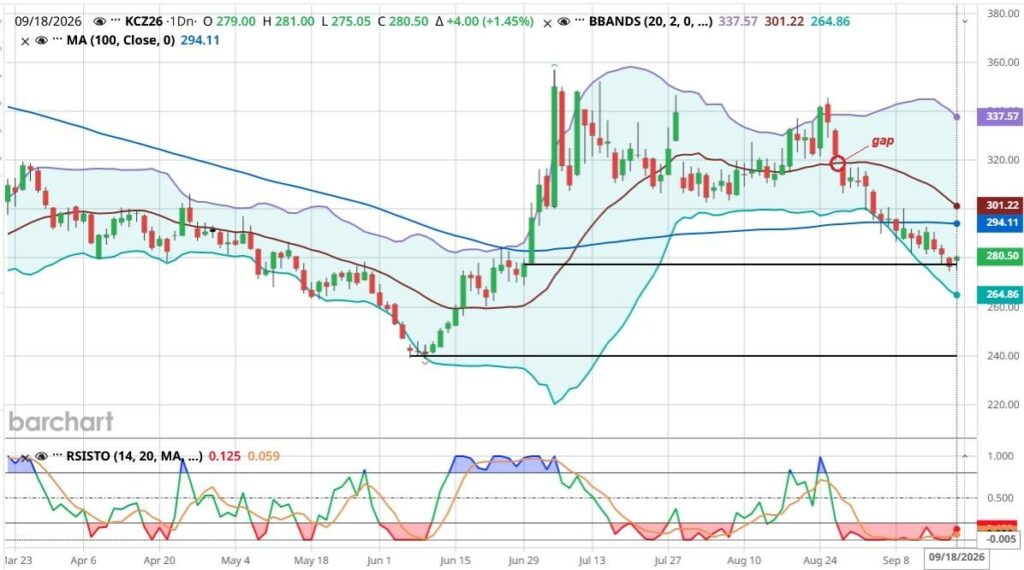
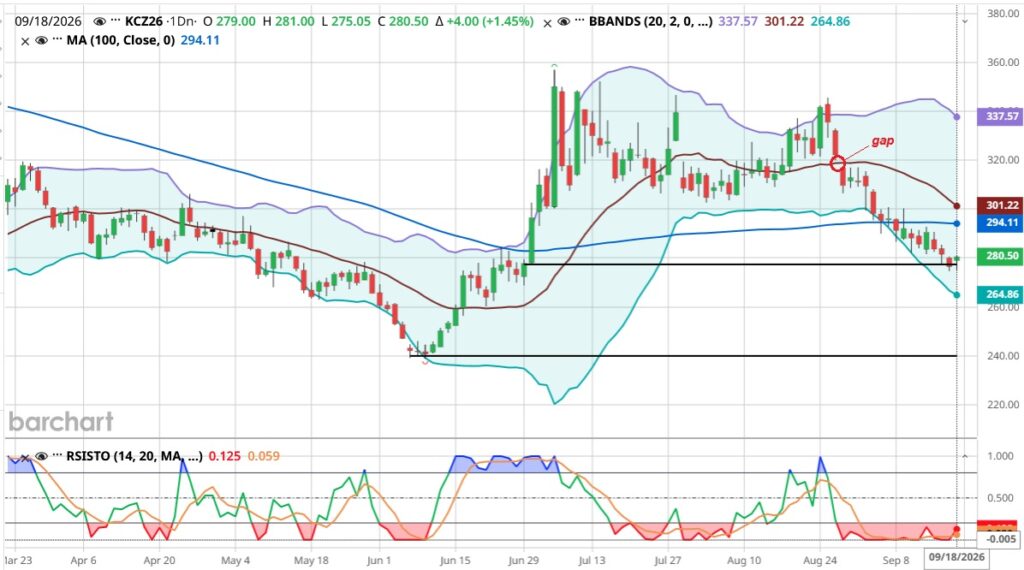
El pecio de café posición en Nueva York siguió su viaje a la baja, rompiendo el soporte de 280 y tocando un mínimo de 274.60 el jueves, el precio más bajo en dos meses y medio. Viernes se recuperó 4 puntos y cerró en 280.50. 

El precio de café está crecientemente bajo presión del gran volumen de cosecha en Brasil. La OIC también pronostica un excedente, 3 millones de sacos, el primero en 5 años. Brasil exportó en agosto 4.2 millones de sacos, el nivel más alto en la historia para ese mes.

Al otro lado, los inventarios certificados de Nueva York cayeron el martes a 217,646 sacos, el nivel más bajo en 27 años, pero el viernes ya habían subido a 258,415 sacos, arriba del nivel de hace mes y medio.

El mercado de Nueva York está muy sobrevendido, pero eso desde hace casi un mes y no ha dado lugar a una retracción, haciendo subir el precio para anear el mercado.

Se ha roto el piso de 280 en los últimos días. A ver si con la leve recuperación del viernes el soporte alrededor de ese nivel puede aguantar. Si no, el precio puede bajar a los niveles de 260 y 240.

Para subir tendré que superar primero el promedio móvil de 100 días, que está en 294.10 centavos.

Soportes: 274.60, 260.15 y 238.85. Resistencias: 292.50, 300.25 y 316.90-319.80 (gap).

En el Commitment of Traders report interés abierto de futuros y opciones combinados bajó en las últimas 2 semanas 8,593 contratos de 200,891 a 192,298. El interés abierto de solo futuros bajó 3,680 contratos de 155,275 a 151,575 el jueves pasado. El volumen diario promedió 29.5 mil contratos (24.1-41.4 mil).

La posición neta de los fondos, bajó 8,861 contratos de 7,145 largo a 1,716 corto. Salvo u breve momento en junio de este año, los fondos han mantenido una posición neta larga desde octubre 2023. Los spreads, que reflejan el grado en que cada operador no comercial mantiene posiciones largas y cortas combinadas, bajaron 6,952 contratos de 72,227 a 65,275.

La posición larga de los comerciales subió 3,334 lotes de 51,651 a 54,985. La posición corta de los comerciales bajó 6,950 lotes de 96,697 a 89,747. 

Los fondos de índice bajaron su posición neta larga con 517 contratos de 35,654 a 35,137.

Se siente un cambio del aire en el mercado de Nueva York. Después de 3 años los fondos han dejado su apuesta al alza y han tomado una posición neta corta. Los tostadores siguen aprovechando la baja del precio para fijar contratos. Los productores están bajando aun más sus fijaciones ante la caída del precio, tuvieron que fijar contra septiembre y en algún momento van a tener que fijar los contratos contra posición diciembre. Muchos habrán perdido y siguen perdiendo mucho por haber esperado con fijar, esperando una recuperación del precio.

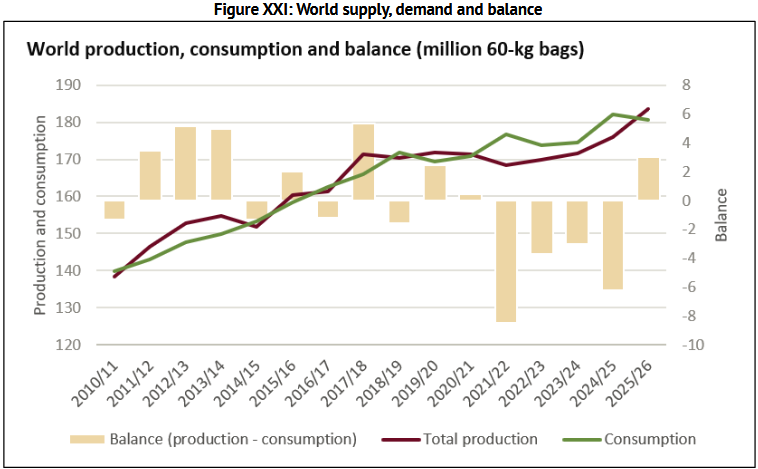
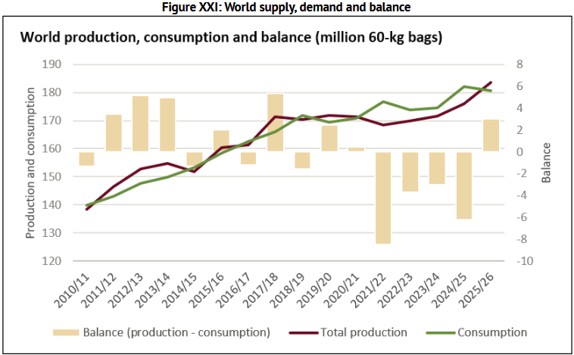
La OIC en su reporte de agosto menciona que en 2025/26 la producción aumentó 4.4% a un volumen récord de 183.6 millones de sacos. El consumo bajó en 0.9% a 180.6 millones, dejando un excedente de 3 millones de sacos, el primer excedente en 5 años.

En el blog pasado El Error analizamos el volumen de exportación mensual y anual de Brasil. Por un “error en el sistema” de Cenicafé la proyección de las exportaciones en agosto estuvo en menos de 3 millones de sacos. Corrigiendo el “error” de repente subió a cerca de 3.8 millones y luego 4.0 millones 

Los datos actualizados ahora por Cenicafé muestran que el volumen en agosto ha sido aun mayor: 4.2 millones de sacos, 31% más que en agosto del año pasado y 36% más que en julio. Es el volumen más alto jamás alcanzado en el mes de agosto, tanto en Arábica (2.9 millones, +26%) como en Robusta (1 millón, +54%), además de 300 mil sacos de café soluble. El récord anterior fue agosto 2024 con 3.8 millones de sacos.

Las condiciones en Brasil son favorables en esta etapa crítica de floración, pero el Niño puede cambiar el panorama. Vietnam aumenta la producción en cosecha 2025/26 6% a 29.4 millones de sacos. Las exportaciones en 2025 subieron 17.5% a 26.3 millones y de enero a agosto de este año otros 13.7 millones a 22.2 millones. Igual que en el caso de Brasil existe mucha incertidumbre en cuanto al impacto que tendrá sobre el nuevo ciclo el “Super Niño” que se está desarrollando.

Productores de Perú reportaron que el diferencial para Grado 1 ha subido hasta +70/+80, pero exportadores dicen que nadie lo está pagando. Ante la escasez de café y los altos precios en Perú, los compradores se han vuelto hace Honduras y el resto de Centroamérica.

Hay problemas con los bookings porque el Canal de Panamá tiene una capacidad limitada para transitar barcos por las esclusas debido a la sequía. El café se está acumulando en las plantas y los puertos, no obstante la reducción de la producción.

Investigadores de la Universidad de Viçosa y el Instituto Federal de Espírito Santo han descubierto bacterias que pueden fijar nitrógeno del aire, disolver fósforo y producir hormonas vegetales. Esto podría reemplazar fertilizantes sintéticos, reduciendo el impacto ambiental y financiero.

Compararon dos fincas en Minas Gerais con la misma variedad de café Catuaí Amarillo durante más de quince años. Una fertiliza con fertilizantes químicos, la otra con estiércol de gallinas. Se identificó 38 cepas de bacterias, entre ellas algunas locales desconocidas hasta el momento. La orgánica enriqueció el suelo con géneros ausentes en los suelos fertilizados con químicos.

Ver Brazilian Coffee Soils Harbor “Hidden Bacteria” That Could Revolutionize Sustainable Farming.

Jos Algra es consultor internacional con más de 40 años de experiencia en café y trabajar con organizaciones de productores.

Este blog fue publicado originalmente en Claase:

https://claase.org/analisis-de-los-precios-del-cafe

Testing the floor

Commentary, Sep 21, Jos Algra

New York coffee prices continued their downward trend, breaking the 280 support level and touching a low of 274.60 on Thursday—the lowest price in two and a half months. On Friday, the price recovered 4 points to close at 280.50.

Coffee prices are facing increasing pressure from Brazil’s large harvest volume. The ICO also forecasts a surplus of 3 million bags—the first in five years. In August, Brazil exported 4.2 million bags, the highest level on record for that month.

On the other hand, certified New York inventories fell to 217,646 bags on Tuesday—a 27-year low—but by Friday, they had risen to 258,415 bags, surpassing levels seen a month and a half ago.

The New York market is heavily oversold—a condition that has persisted for nearly a month without triggering a price correction or a market rebound.

The 280 floor has been breached in recent days. It remains to be seen whether the support level around that mark can hold following Friday’s slight recovery. If not, prices could drop to the 260 and 240 levels.

To move higher, the price must first break above the 100-day moving average, currently at 294.10 cents.

Support: 274.60, 260.15, and 238.85. Resistance: 292.50, 300.25, and 316.90–319.80 (gap).

According to the Commitment of Traders report, combined futures and options Open Interest fell by 8,593 contracts over the last two weeks, dropping from 200,891 to 192,298. Futures-only open interest decreased by 3,680 contracts, from 155,275 to 151,575 as of last Thursday. Daily volume averaged 29.5 thousand contracts (ranging from 24.1 to 41.4 thousand).

The funds’ net position shifted by 8,861 contracts, moving from a net long of 7,145 to a net short of 1,716. Except for a brief moment in June of this year, funds have maintained a net long position since October 2023. Spreads – reflecting the extent to which non-commercial traders hold combined long and short positions – decreased by 6,952 contracts, falling from 72,227 to 65,275.

Commercials’ long positions rose by 3,334 lots, from 51,651 to 54,985, while their short positions fell by 6,950 lots, from 96,697 to 89,747.

Index funds reduced their net long position by 517 contracts, dropping from 35,654 to 35,137.

There is a palpable shift in the atmosphere of the New York market. After three years, funds have abandoned their bullish bets and adopted a net short position. Roasters continue to capitalize on the price drop to lock in contracts. Producers are further reducing their price fixings amidst the decline; they were forced to fix against the September contract and will eventually have to fix contracts against the December position. Many have incurred—and continue to incur—significant losses by delaying their price fixations, waiting for a price recovery. 

In its August report, the ICO notes that in 2025/26, production increased by 4.4% to a record volume of 183.6 million bags. Consumption fell by 0.9% to 180.6 million, resulting in a surplus of 3 million bags—the first surplus in five years.

In our previous blog post, The error we analysed Brazil’s monthly and annual export volumes. Due to a “system error” at Cenicafé, the projected export figure for August initially stood at under 3 million bags. Once the “error” was corrected, the figure jumped to nearly 3.8 million and subsequently to 4.0 million.

Updated data from Cenicafé now show that the August volume was even higher: 4.2 million bags, a 31% increase over August of last year and a 36% rise compared to July. This represents the highest volume ever recorded for the month of August across all categories: Arabica (2.9 million, +26%), Robusta (1 million, +54%), and 300 thousand bags of soluble coffee. The previous record was set in August 2024, with 3.8 million bags.

Conditions in Brazil remain favourable during this critical flowering stage, though the El Niño phenomenon could alter the outlook. Vietnam is increasing production for the 2025/26 harvest by 6%, reaching 29.4 million bags. Exports rose by 17.5% to 26.3 million in 2025, with an additional 13.7 million exported between January and August of this year, bringing the total to 22.2 million. As with Brazil, there is significant uncertainty regarding the impact the developing “Super El Niño” will have on the new crop cycle.

Producers in Peru have reported that the price differential for Grade 1 coffee has risen to +70/+80, though exporters state that no one is actually paying that rate. Faced with coffee shortages and high prices in Peru, buyers are turning to Honduras and the rest of Central America.

There are problems with the bookings, because the Panama Canal has a reduced capacity to lock ships through due to the draught and coffee is accumulating at the mills and ports, notwithstanding the reduction in production. 

Researchers from the University of Viçosa and the Federal Institute of Espírito Santo have discovered bacteria capable of fixing atmospheric nitrogen, solubilizing phosphorus, and producing plant hormones. This discovery could potentially replace synthetic fertilisers, thereby reducing both environmental and financial impacts. 

Two farms in Minas Gerais growing the same Yellow Catua coffee variety were compared over a period of more than fifteen years. One uses chemical fertilisers, while the other uses chicken manure. Thirty-eight bacterial strains were identified, including some local ones that were previously unknown. The organic method enriched the soil with genera that were absent from the chemically fertilised soils.

See Brazilian Coffee Soils Harbor “Hidden Bacteria” That Could Revolutionize Sustainable Farming.

Jos Algra is an international consultant with more than 40 years of experience in coffee and working with producer organisations.

This blog was originally published in Spanish in Claase:

https://claase.org/analisis-de-los-precios-del-cafe